🪨 Professional Gravel Calculator
Calculate the exact amount of gravel needed for your project with precision
💡 How to use this calculator:
1. Select your gravel type from the dropdown menu
2. Enter the dimensions of your area (length, width, depth)
3. Optionally enter pricing information to calculate total cost
4. Click "Calculate" to get detailed results including volume, weight, and cost estimates
📦 Gravel Specification
📏 How much gravel do I need?
Enter the dimensions of the area you want to fill with gravel
💡 Recommended depth: 5-10 cm (2-4 inches) for pathways, 10-15 cm (4-6 inches) for driveways
💰 How much will the gravel cost me?
📊 Calculation Results
🔢 Calculation Steps
📚 Understanding Your Results
Volume: The total cubic space your gravel will occupy. This is calculated by multiplying length × width × depth.
Weight: The total mass of gravel needed, calculated using the density of your selected gravel type.
Waste Factor: Extra material added to account for spillage, compaction, and irregular surfaces. Industry standard is 5-15%.
Compaction Factor: Gravel compacts when compressed. A factor of 1.3 means you need 30% more material to achieve the desired depth after compaction.
📦 Common Gravel Bag Sizes
Planning a construction or landscaping project often begins with a simple but critical question: how much material is actually needed? Whether you are building a driveway, creating a garden path, installing a drainage system, or preparing a foundation base, gravel plays an essential role in many outdoor and construction projects. However, estimating the right amount of gravel can be surprisingly challenging without the proper tools. This is where a Gravel Calculator becomes extremely useful.
A Gravel Calculator is a digital estimation tool designed to help homeowners, contractors, landscapers, and builders determine the exact quantity of gravel required for a specific project. Instead of relying on rough guesses or manual calculations that may lead to costly mistakes, this tool provides a fast and accurate way to measure the amount of gravel needed based on the project’s dimensions. By entering simple measurements such as length, width, and depth, users can quickly receive an estimate in cubic yards, cubic meters, or even tons.
Accurate material estimation is a crucial part of successful project planning. Ordering too little gravel can delay construction and require additional deliveries, while ordering too much can result in unnecessary expenses and wasted materials. Gravel is typically sold in bulk, and transportation costs can significantly increase the overall budget if calculations are not done properly. With the help of an online gravel estimator, users can avoid these issues and ensure they purchase the correct amount of material the first time.
In recent years, digital construction tools have become increasingly popular as more homeowners and professionals look for efficient ways to plan projects. A Gravel Calculator is one of the most practical tools in this category because it simplifies complex volume calculations into a quick and user-friendly process. Instead of manually converting measurements or estimating coverage areas, the calculator performs these steps instantly, saving both time and effort.
Another important advantage of using a gravel calculation tool is its ability to support different measurement units. Construction projects around the world use various systems, including feet, meters, yards, and tons. A reliable calculator automatically converts these units and provides consistent results, making it easier for users in different regions to plan their projects accurately.
Gravel is commonly used in a wide variety of applications. In residential landscaping, it is often used for decorative garden paths, patios, and rock gardens. In construction, gravel forms an important base layer for driveways, roads, and building foundations. It also plays a vital role in drainage systems where water management is required. Because each of these applications may require different depths and gravel types, calculating the correct quantity becomes even more important.
For example, a decorative garden path may only require a thin gravel layer of around two inches, while a driveway base may need four to six inches or more to provide proper stability. Without accurate calculations, it becomes difficult to determine how much material should be ordered. A Gravel Calculator helps eliminate this uncertainty by providing a precise estimate tailored to the dimensions of the project.
Modern gravel calculators are typically available online and are designed with user-friendly interfaces. Most tools only require three basic inputs: length, width, and depth. After entering these values, the system automatically calculates the volume of gravel required and may also estimate the weight based on average gravel density. Some advanced calculators even provide additional information such as coverage area, cost estimation, and material recommendations.
Another key benefit of using a gravel volume calculator is that it helps reduce environmental waste. Over-ordering materials often leads to leftover gravel that may not be used in future projects. By calculating the exact quantity needed, users can minimize excess material and make their projects more efficient and sustainable.
For contractors and professional builders, accurate gravel estimation also improves project scheduling. Construction timelines often depend on the timely delivery of materials. If gravel quantities are miscalculated, projects may experience delays while waiting for additional supplies. Using a reliable calculation tool helps prevent these disruptions and ensures materials arrive in the correct amounts.
Homeowners who enjoy DIY landscaping projects can also benefit greatly from a gravel estimator. Many people underestimate how much gravel is required for even small outdoor areas. A simple pathway or garden bed may appear small but can require a significant volume of material when the correct depth is applied. By using a calculator before purchasing materials, homeowners can plan their budgets more effectively and avoid unexpected costs.
The popularity of gravel calculators continues to grow because they combine simplicity with practical functionality. Instead of performing complex mathematical conversions, users can rely on automated calculations that provide instant results. This makes project planning accessible to both professionals and beginners who may not have extensive construction experience.
As outdoor landscaping and home improvement projects become more common, the demand for reliable planning tools has increased. A Gravel Calculator serves as one of the most efficient ways to estimate material needs while ensuring accuracy, saving money, and reducing waste. By using this tool during the early planning stage, individuals and professionals can approach their projects with greater confidence and better preparation.
In the following sections, we will explore how a gravel calculator works, the formulas behind gravel volume estimation, the types of gravel used in construction and landscaping, and practical tips for calculating gravel for different types of projects. Understanding these concepts will help ensure that every project is planned with the right amount of material from the start.
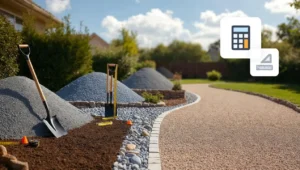
How a Gravel Calculator Works
A gravel calculator is a simple but powerful tool used in landscaping and construction to estimate how much gravel is required for a project. Whether you’re building a driveway, installing drainage, or designing a garden pathway, calculating the right amount of gravel helps prevent overspending and delays.
Instead of guessing, a gravel calculator uses mathematical formulas based on the area and depth of the gravel layer to determine the total volume needed. It then converts that volume into commonly used units such as cubic yards, cubic feet, cubic meters, or tons.
Using a cubic yard gravel calculator or gravel quantity calculator also helps contractors and homeowners plan deliveries more accurately and avoid material shortages.
Basic Principle Behind Gravel Volume Calculation
At the core of every gravel estimator tool is a basic volume formula. Gravel is typically calculated as a three-dimensional volume, which means you need the area of the surface and the depth of the gravel layer.
Area × Depth Formula
The most common gravel volume formula is:
Volume = Area × Depth
For example:
- Area = 200 square feet
- Depth = 4 inches (0.33 feet)
Calculation:
Volume = 200 × 0.33
Volume = 66 cubic feet
Once the total volume is known, it can be converted into cubic yards or tons, which are the units typically used by gravel suppliers.
This formula is the foundation of nearly every gravel weight calculator and gravel estimator tool used today.
Converting Units (Feet, Meters, Yards)
Because gravel is sold in different measurement systems, conversions are often required.
Common conversions include:
- 1 cubic yard = 27 cubic feet
- 1 cubic meter = 35.3 cubic feet
- 1 foot = 12 inches
For example:
If your project requires 81 cubic feet of gravel, converting to cubic yards would be:
81 ÷ 27 = 3 cubic yards
Many online tools automatically perform these conversions, making landscaping gravel calculation much easier for beginners.
Common Units Used in Gravel Calculation
Gravel is measured in several units depending on the region, supplier, and project type.
Cubic Yards
Cubic yards are the most common unit used in North America when ordering gravel.
Contractors often calculate gravel quantities in cubic yards because trucks and bulk suppliers typically deliver material in this measurement.
Example:
- Small pathway: 1–2 cubic yards
- Driveway base: 10–20 cubic yards
- Large landscaping project: 30+ cubic yards
Because of this, many people search for a cubic yard gravel calculator when planning construction projects.
Cubic Feet
Cubic feet are commonly used for smaller projects or when calculating gravel manually.
Hardware stores often sell gravel bags labeled in cubic feet.
Example:
- 1 bag = 0.5 cubic feet
- 54 bags ≈ 1 cubic yard
Cubic feet are especially useful when working on garden beds, small paths, or DIY landscaping.
Cubic Meters
Cubic meters are widely used in Europe, Australia, and many international construction markets.
Conversion example:
1 cubic meter = 1.31 cubic yards
Large infrastructure or engineering projects often rely on cubic meters for precise material planning.
Tons and Weight Estimation
Many gravel suppliers sell gravel by weight rather than volume. In these cases, the volume must be converted into tons using a gravel density calculation.
Average conversion:
- 1 cubic yard of gravel ≈ 1.4 to 1.7 tons
Example:
5 cubic yards × 1.5 tons = 7.5 tons of gravel
A gravel weight calculator simplifies this process by automatically estimating the total weight required.
Standard Gravel Density Used in Calculations
Gravel density plays an important role in converting volume into weight.
Density varies depending on the type of rock, moisture content, and compaction.
Average Gravel Weight per Cubic Yard
The typical density used for general calculations is:
1 cubic yard of gravel ≈ 1.5 tons (3,000 pounds)
This estimate works well for:
- Crushed stone
- Pea gravel
- Drainage gravel
However, it’s always a good idea to confirm the exact density with your gravel supplier.
Density Differences by Gravel Type
Different types of gravel have slightly different densities.
Examples:
| Gravel Type | Approx. Weight per Cubic Yard |
|---|---|
| Pea gravel | 1.3 – 1.5 tons |
| Crushed stone | 1.4 – 1.7 tons |
| River rock | 1.2 – 1.4 tons |
| Limestone gravel | 1.4 – 1.6 tons |
Because of these variations, many gravel density calculation tools allow users to select the gravel type for more accurate results.
Factors Affecting Gravel Quantity Estimation
Even with accurate formulas, several real-world factors can influence the final gravel amount required.
Understanding these variables helps prevent underestimation.
Depth of Gravel Layer
The depth of the gravel layer has the biggest impact on material requirements.
Typical depths include:
- Garden paths: 2–3 inches
- Landscaping areas: 2–4 inches
- Driveways: 4–8 inches
- Drainage systems: 6–12 inches
A deeper layer dramatically increases total volume.
For example:
- 3 inches depth may require 3 cubic yards
- 6 inches depth may require 6 cubic yards for the same area
Compaction Factor
Gravel compresses slightly when compacted. This is known as the compaction factor.
During installation:
- Loose gravel settles
- Air gaps disappear
- Final depth becomes slightly thinner
Contractors usually add 5–10% extra gravel to account for compaction.
This ensures the project maintains the correct thickness after settling.
Ground Irregularities
Not all surfaces are perfectly flat. Uneven ground can affect how much gravel is needed.
Common irregularities include:
- Slopes
- Soil dips
- Uneven excavation
- Natural terrain variation
These factors often require extra material to level the surface, which is why professionals recommend ordering slightly more gravel than the exact calculated amount.
Step-by-Step Guide to Using a Gravel Calculator
Using a gravel quantity calculator is straightforward, but accuracy depends on measuring the project area correctly and selecting the right depth.
By following a simple step-by-step process, you can quickly calculate gravel needed for almost any landscaping or construction project.
Step 1 – Measure the Area
The first step is determining the total surface area that will be covered with gravel.
Different shapes require different measuring methods.
Measuring Rectangular Areas
Rectangular areas are the easiest to calculate.
Formula:
Area = Length × Width
Example:
- Length: 20 feet
- Width: 10 feet
Area = 20 × 10 = 200 square feet
This method works well for:
- Driveways
- Parking pads
- Garden beds
- Patios
Measuring Circular Areas
Circular areas require a different formula.
Area = π × radius²
Example:
- Radius: 6 feet
Area = 3.14 × 6²
Area ≈ 113 square feet
Circular measurements are commonly used for decorative landscaping areas or fire pit zones.
Measuring Irregular Landscaping Areas
For irregular shapes, divide the space into smaller rectangles or triangles, then calculate each section separately.
Steps:
- Break the area into simple shapes
- Calculate each area
- Add them together
This technique is frequently used in landscaping gravel calculation for complex garden layouts.
Step 2 – Determine Gravel Depth
The next step is choosing the correct gravel depth for your project.
Depth determines durability, drainage, and stability.
Recommended Gravel Depth for Driveways
Driveways require a strong base layer to support vehicle weight.
Typical structure:
- Base layer: 4–6 inches of crushed gravel
- Top layer: 2–3 inches decorative gravel
Total depth can reach 6–8 inches depending on soil conditions.
Using a driveway gravel calculator helps determine the correct amount for this thicker structure.
Gravel Depth for Pathways
Garden pathways require less gravel because they carry lighter loads.
Typical depth:
- 2–3 inches
Adding landscape fabric underneath helps prevent weeds and keeps gravel in place.
Gravel Depth for Drainage Systems
Drainage systems require deeper gravel layers to allow water to move efficiently.
Typical depths include:
- French drains: 8–12 inches
- Drainage trenches: 6–12 inches
A drainage gravel calculator is often used to estimate these larger quantities.
Step 3 – Enter Dimensions into the Gravel Calculator
Once you know the area and depth, you can input the measurements into a gravel estimator tool.
Most calculators require three main inputs.
Length Input
Enter the total length of the project area.
Example:
- Driveway length: 40 feet
Some calculators also support meters for international projects.
Width Input
Next, input the width.
Example:
- Driveway width: 12 feet
The calculator multiplies length and width to determine total area.
Depth Input
Depth must usually be entered in inches or feet.
Example:
- Gravel depth: 4 inches
The calculator then converts everything into volume automatically.
Step 4 – Calculate Total Gravel Needed
After entering the measurements, the calculator provides the final results.
This usually includes:
- Total volume of gravel
- Equivalent cubic yards
- Estimated tons of gravel
Converting Volume into Tons
To estimate weight, calculators apply an average density.
Example:
4 cubic yards × 1.5 tons
= 6 tons of gravel
This number is important because many suppliers sell gravel by the ton.
Ordering Gravel from Suppliers
When ordering gravel, it’s recommended to add 5–10% extra material to cover waste, compaction, and ground irregularities.
Example:
Calculated requirement:
- 8 cubic yards
Order amount:
- 9 cubic yards
This small buffer prevents delays and ensures the project can be completed without needing another delivery.
Gravel Calculator for Different Construction Projects
Gravel calculators are used in many types of projects, from simple backyard improvements to large construction sites. Each project requires a slightly different calculation depending on the depth, load requirements, and surface area.
Using the right gravel estimator tool ensures the correct quantity and helps maintain structural stability.
Gravel Calculator for Driveways
Driveways are one of the most common uses for gravel. A proper driveway requires multiple layers to support vehicles and prevent sinking over time.
A driveway gravel calculator helps estimate the total gravel needed for both the base and top layers.
Driveway Base Layer Calculation
The base layer is the most important structural component of a gravel driveway.
Typical base specifications:
- Crushed stone or crushed limestone
- 4–6 inches thick
- Compacted using a plate compactor
Example calculation:
Driveway size:
- 40 ft long
- 12 ft wide
- 6 inch base layer
This calculation determines the base volume of gravel needed before adding the top decorative layer.
Gravel Thickness Recommendations
Driveway thickness depends on vehicle weight and soil conditions.
Typical recommendations:
| Use Type | Gravel Depth |
|---|---|
| Light residential driveway | 4–6 inches |
| Standard residential driveway | 6–8 inches |
| Heavy vehicles or trucks | 10–12 inches |
These depths ensure durability and reduce rutting or erosion.
Gravel Calculator for Garden Paths
Gravel pathways are a popular landscaping feature because they are affordable, easy to install, and visually appealing.
A pathway gravel estimator helps determine the correct gravel coverage.
Decorative Gravel Planning
Many homeowners choose decorative gravel such as:
- Pea gravel
- Crushed granite
- River rock
- Marble chips
These materials enhance the aesthetic appeal of gardens while providing a natural walking surface.
Pathway Gravel Coverage
Typical pathway specifications:
- Depth: 2–3 inches
- Width: 2–4 feet
Example:
Pathway size:
- Length: 30 ft
- Width: 3 ft
- Depth: 3 inches
Using a landscaping gravel calculator quickly determines the required volume.
Gravel Calculator for Drainage Systems
Gravel plays a crucial role in drainage systems by allowing water to flow freely while preventing soil erosion.
A drainage gravel calculator helps estimate the amount required for trenches and drainage pipes.
French Drain Gravel Estimation
A French drain is a trench filled with gravel and a perforated pipe that redirects water away from structures.
Typical trench dimensions:
- Width: 12–18 inches
- Depth: 18–24 inches
Gravel surrounds the pipe to create a permeable layer for water movement.
Drainage Gravel Requirements
Drainage gravel should have larger stones and minimal fine particles to maintain permeability.
Common types include:
- Washed gravel
- Drain rock
- Crushed stone #57
Using the correct gravel type improves long-term drainage performance.
Gravel Calculator for Landscaping
Landscaping projects frequently use gravel for decorative and functional purposes.
A landscaping gravel calculator helps determine coverage for garden features.
Decorative Rock Landscaping
Decorative gravel is commonly used for:
- Rock gardens
- Xeriscaping
- Modern minimalist landscapes
- Ground cover around plants
These designs reduce maintenance and water usage while adding visual texture.
Garden Bed Gravel Layers
In garden beds, gravel can serve as:
- Decorative ground cover
- Weed suppression layer
- Soil erosion protection
Typical depth:
- 2–3 inches
Landscape fabric is often placed underneath to keep gravel separate from soil.
Gravel Calculator for Construction Foundations
In construction, gravel is frequently used as a sub-base layer beneath concrete slabs, pavers, or structural foundations.
A gravel quantity calculator ensures the correct amount is prepared before construction begins.
Sub-Base Gravel Estimation
Sub-base gravel supports structures by distributing weight evenly.
Common applications include:
- Concrete slabs
- Shed foundations
- Patio pavers
- Garage floors
Typical depth:
- 4–8 inches
Compacted gravel improves load-bearing capacity and prevents ground movement.
Structural Support Layers
For larger structures, gravel layers may include multiple materials such as:
- Coarse crushed stone
- Compacted base aggregate
- Fine leveling gravel
Each layer serves a different structural purpose, and accurate calculations ensure long-term stability and durability.
Types of Gravel Used in Construction and Landscaping
Gravel is one of the most versatile materials used in both construction and landscaping projects. From driveways and drainage systems to decorative garden paths, the types of gravel you choose can significantly impact durability, appearance, and performance.
Different landscaping gravel types offer unique characteristics such as drainage ability, compaction strength, or decorative appeal. Understanding the differences helps homeowners, contractors, and landscape designers select the right material for the job.
Below are some of the most common gravel types used in modern construction and outdoor design.
Pea Gravel
Pea gravel is one of the most recognizable and widely used decorative gravel options. It consists of small, smooth, rounded stones typically about the size of a pea.
Characteristics
Pea gravel is naturally rounded because it is formed through years of natural weathering in rivers and streams. This process creates smooth edges and a uniform appearance.
Key characteristics include:
- Smooth and rounded texture
- Usually 3/8 inch in diameter
- Available in multiple natural colors such as beige, brown, gray, and white
- Excellent drainage capability
Because of its smooth texture, pea gravel is comfortable to walk on, making it a popular choice for outdoor living spaces.
Best Applications
Pea gravel works best in areas where aesthetics and drainage matter more than heavy structural support.
Common uses include:
- Garden pathways
- Patio surfaces
- Playground areas
- Decorative landscaping beds
- Around stepping stones
However, it is not ideal for driveways because the rounded stones shift easily under pressure.
Crushed Stone Gravel
Crushed stone gravel is produced by mechanically crushing large rocks into smaller angular pieces. This type of gravel is often compared in discussions of crushed stone vs gravel, since crushed stone has sharper edges and compacts better.
Durability Advantages
The angular shape of crushed stone creates excellent interlocking properties. When compacted, the stones bind together tightly, forming a stable surface.
Key advantages include:
- Strong load-bearing capacity
- Superior compaction
- Long-lasting durability
- Less movement compared to rounded gravel
These characteristics make crushed stone one of the most reliable materials for structural applications.
Ideal Uses in Construction
Crushed stone gravel is commonly used in heavy-duty construction projects.
Typical applications include:
- Driveway bases
- Road construction
- Concrete aggregates
- Foundation backfill
- Structural drainage layers
Because of its strength, it remains one of the most commonly used construction aggregates worldwide.
River Rock Gravel
River rock gravel consists of naturally rounded stones collected from riverbeds. These stones are larger than pea gravel and often used for decorative purposes.
Decorative Landscaping Uses
River rock is highly valued in landscaping due to its natural beauty. The stones often display rich colors such as gray, tan, red, and mixed earth tones.
Popular decorative uses include:
- Garden borders
- Dry river beds
- Water features
- Landscape accents
- Around trees and shrubs
Designers often choose river rock when they want a natural, organic look in outdoor spaces.
Drainage Benefits
Beyond aesthetics, river rock also offers excellent drainage capabilities. Because of the spaces between the stones, water flows easily through the material.
This makes it useful for:
- French drains
- Drainage channels
- Erosion control areas
- Around downspouts
River rock provides both visual appeal and functional water management.
Quarry Process Gravel
Quarry process gravel, sometimes called “crusher run,” is a mixture of crushed stone and fine stone dust. It is one of the most stable base materials available.
Base Layer Applications
Because of its mixed particle sizes, quarry process gravel forms a compact and stable foundation when compressed.
It is commonly used as a base layer for:
- Driveways
- Walkways
- Paver patios
- Retaining walls
- Road sub-bases
The stone dust fills the gaps between larger particles, creating a tightly packed surface.
Compaction Properties
One of the key advantages of quarry process gravel is its excellent compaction ability.
Benefits include:
- Strong structural support
- Minimal shifting over time
- Reduced settling issues
- Smooth, firm base for paving materials
Contractors frequently prefer this gravel type when building long-lasting surfaces.
Jersey Shore Gravel
Jersey Shore gravel is a distinctive yellow-gold colored stone popular in landscaping. It originates from the coastal regions of the northeastern United States.
Visual Appeal
The bright golden tones of Jersey Shore gravel make it stand out compared to traditional gray gravel.
Its visual benefits include:
- Warm golden color
- Smooth rounded texture
- Consistent appearance
- Strong decorative impact
It works especially well in modern landscape designs where color contrast is important.
Garden Applications
This gravel type is widely used for decorative landscaping projects.
Common uses include:
- Garden walkways
- Flower bed covering
- Decorative borders
- Patio accent areas
- Xeriscaping landscapes
Because it combines beauty with functionality, it is often categorized among premium decorative gravel options.
Gravel Coverage Guide (Practical Estimation Table)
Estimating the right amount of gravel is one of the most important steps in planning a construction or landscaping project. Ordering too little can delay work, while ordering too much increases costs.
A gravel coverage chart helps determine how much material you need based on depth and surface area.
Gravel Coverage per Cubic Yard
A cubic yard is one of the most common measurement units used in landscaping and construction supply.
Coverage at 1 Inch Depth
At a shallow depth of 1 inch, one cubic yard of gravel typically covers:
About 320 – 325 square feet
This depth is often used for decorative top layers or light landscaping projects.
Coverage at 2 Inch Depth
At 2 inches deep, gravel coverage decreases because more material is needed.
Approximate coverage:
160 square feet per cubic yard
This depth is common for garden paths and small patio areas.
Coverage at 4 Inch Depth
For heavier applications such as driveways, a thicker layer is recommended.
Coverage:
80 square feet per cubic yard
A 4-inch depth provides stronger support and better durability for vehicles and heavy loads.
Gravel Coverage per Ton
Gravel is also commonly sold by weight. Understanding gravel coverage per ton helps estimate materials more accurately.
On average:
1 ton of gravel ≈ 0.75 cubic yards
However, this varies depending on gravel type and moisture content.
Small Landscaping Projects
For smaller projects like garden beds or stepping stone paths:
- 1 ton of gravel usually covers 70 – 90 square feet at 3 inches deep.
This is ideal for light landscaping work.
Medium Residential Projects
Projects such as backyard patios or long walkways typically require more material.
Typical coverage:
- 1 ton = 50 – 70 square feet at 4 inches deep.
Large Construction Sites
For driveways, road bases, or drainage systems, thicker layers are used.
Coverage example:
- 1 ton = 35 – 50 square feet at 5–6 inches deep.
These thicker layers provide stronger load distribution.
Example Gravel Calculation Scenarios
Real-world examples make gravel estimation easier to understand.
Driveway Example
Imagine a driveway measuring:
- Length: 40 feet
- Width: 12 feet
- Desired gravel depth: 4 inches
Calculation:
Area = 480 square feet
At 4 inches depth:
You would need approximately 6 cubic yards of gravel, or about 8 tons depending on gravel density.
Garden Path Example
A small garden path might measure:
- Length: 20 feet
- Width: 3 feet
- Depth: 2 inches
Total area = 60 square feet
You would need roughly:
0.4 cubic yards of gravel (about 0.5 tons).
Drainage Trench Example
Consider a drainage trench:
- Length: 30 feet
- Width: 1.5 feet
- Depth: 6 inches
Area = 45 square feet
Material required:
Around 0.8 cubic yards of gravel for proper drainage coverage.
Benefits of Using an Online Gravel Calculator
Manual calculations can sometimes lead to estimation errors. This is where an online gravel calculator becomes extremely useful.
These tools simplify the process and help both professionals and homeowners plan projects more efficiently.
Faster Project Planning
A construction planning calculator allows users to instantly estimate the amount of gravel needed by entering simple measurements.
Instead of doing manual calculations, results appear within seconds.
This speeds up planning and material ordering.
More Accurate Gravel Estimation
Online tools reduce human error when calculating:
- Square footage
- Depth requirements
- Cubic yard conversions
Accurate calculations help ensure you order the correct quantity the first time.
Reducing Construction Costs
Over-ordering materials can significantly increase project costs. Gravel deliveries often include transport and loading fees.
By using a material estimator tool, you can order only what your project actually requires.
This leads to better cost efficiency.
Preventing Material Waste
Excess gravel often becomes wasted material if it cannot be reused elsewhere.
Precise calculations help prevent:
- Leftover piles of unused gravel
- Unnecessary storage issues
- Disposal costs
Sustainable construction planning benefits both budgets and the environment.
Better Budget Management
When you know exactly how much gravel you need, budgeting becomes easier.
Accurate estimates help with:
- Comparing supplier prices
- Calculating delivery costs
- Planning labor and installation timelines
For homeowners and contractors alike, an online gravel calculator provides a practical solution for efficient project management.
Common Mistakes When Calculating Gravel
Calculating the right amount of gravel sounds simple, but many people underestimate how easy it is to make mistakes. Whether you’re building a driveway, landscaping a yard, or installing a drainage system, even small gravel estimation mistakes can lead to wasted money, project delays, or uneven surfaces.
Many DIY builders and even experienced contractors encounter gravel measurement errors because they overlook important factors like compaction, depth variation, and unit conversion. Understanding these common pitfalls can help you estimate gravel more accurately and avoid unnecessary costs.
Below are some of the most frequent mistakes people make when calculating gravel quantities.
Ignoring Compaction Factor
One of the biggest gravel estimation mistakes is forgetting that gravel compacts over time. When gravel is first poured, it contains air gaps between stones. As the material settles and is compacted by foot traffic, vehicles, or machinery, its volume decreases.
For example, crushed stone can compact between 10% and 20% depending on the material type and installation method. If you calculate gravel based only on loose volume, you may end up with too little material after compaction.
To avoid this issue, always include a compaction allowance when estimating gravel volume.
Miscalculating Depth
Depth miscalculations are another common source of gravel measurement errors. Many people estimate depth visually or assume that the ground is perfectly level.
In reality, most surfaces have small variations that can significantly affect the total gravel required. A driveway designed with a 10 cm gravel layer may actually need more material if the ground underneath is uneven.
It’s always best to measure depth in multiple locations across the area and calculate the average thickness. This ensures a more accurate gravel estimate.
Incorrect Unit Conversion
Another frequent mistake is mixing different measurement units. Gravel calculations may involve meters, centimeters, feet, inches, cubic yards, or cubic meters depending on the region or supplier.
For example:
- 1 cubic yard = 27 cubic feet
- 1 cubic meter ≈ 1.31 cubic yards
Failing to convert units correctly can result in ordering far too much or too little gravel.
Using consistent units throughout the calculation process helps eliminate these gravel estimation mistakes.
Ordering Too Little Material
Many homeowners try to reduce costs by ordering the exact calculated amount of gravel. Unfortunately, this often leads to shortages during installation.
Small measurement errors, compaction, and uneven ground can quickly increase the required material.
Industry professionals often recommend adding 10–15% extra gravel to your estimate. This buffer helps prevent delays and ensures the project can be completed without reordering materials.
Not Accounting for Waste
Material waste is another factor often overlooked. Gravel can be lost during transportation, spreading, or leveling. Some stones may also sink into soft soil beneath the installation area.
For large landscaping projects or long driveways, waste can account for 5–10% of the total gravel volume.
By including a waste margin in your calculation, you can avoid running out of material midway through the project.
Advanced Gravel Calculation Tips
Once you understand the common mistakes, you can improve accuracy with more advanced gravel calculation methods. These techniques are especially useful for landscaping professionals, construction projects, or complex terrain.
Advanced estimation methods consider compaction behavior, surface slope, and layering techniques to produce more reliable gravel volume estimates.
Accounting for Gravel Compaction
Gravel compaction is one of the most important factors when calculating total material requirements.
Compaction Percentages
Different gravel types compact at different rates. Typical compaction ranges include:
- Crushed stone: 10–20%
- Pea gravel: 5–10%
- Road base gravel: 15–25%
The more angular the stone, the more tightly it compacts under pressure.
Adjusting Gravel Estimates
To compensate for compaction, multiply the calculated volume by a compaction factor.
Example:
If a project requires 5 cubic meters of compacted gravel, and the material compacts by 15%, you should order:
5 × 1.15 = 5.75 cubic meters
This adjustment ensures that the final compacted layer reaches the desired thickness.
Estimating Gravel for Sloped Surfaces
Flat areas are easier to calculate, but many landscaping projects involve slopes or uneven terrain.
Uneven Terrain Calculations
When working with irregular ground, divide the surface into smaller sections such as rectangles or triangles. Measure each section individually and calculate the gravel volume separately.
After calculating each section, add the totals together to determine the full gravel requirement.
This method reduces gravel measurement errors and improves accuracy.
Landscape Slope Adjustments
For sloped surfaces like driveways or pathways, depth varies between the top and bottom of the slope.
A common technique is to measure:
- Depth at the highest point
- Depth at the lowest point
Then calculate the average depth before applying the gravel volume formula.
This approach provides a more realistic estimate of gravel needed for sloped installations.
Gravel Layering Techniques
Professional landscaping projects often use multiple gravel layers instead of a single layer. This improves stability, drainage, and visual appearance.
Each layer serves a specific purpose in the construction process.
Base Layer
The base layer forms the structural foundation of the gravel surface.
Typical characteristics include:
- Large crushed stones
- Thickness of 10–20 cm
- Strong load-bearing capacity
This layer distributes weight and prevents sinking.
Top Layer
The top layer is made from smaller gravel pieces that create a smoother walking or driving surface.
Common materials include:
- Pea gravel
- Crushed limestone
- Decorative crushed stone
This layer is usually 5–10 cm thick.
Decorative Finish Layer
In landscaping projects, a final decorative layer may be added to enhance visual appeal.
Popular decorative gravel types include:
- River rock
- Colored gravel
- Polished stones
These stones are mainly aesthetic and typically only 2–5 cm thick.
Gravel Calculator vs Manual Calculation
When estimating gravel volume, you can either use an online calculator or perform the calculations manually. Each method has its advantages depending on the project size and complexity.
Speed Comparison
Gravel calculators are significantly faster than manual calculations.
By entering the area dimensions and depth, a calculator can instantly generate gravel estimates in cubic yards, cubic meters, or tons.
Manual gravel calculation requires several steps, including measuring, converting units, and applying the gravel volume formula.
For large projects, calculators save considerable time.
Accuracy Comparison
Online calculators reduce the risk of human error. Many tools automatically handle unit conversions and include built-in compaction adjustments.
However, calculators are only as accurate as the measurements provided. If the input data is incorrect, the results will also be inaccurate.
Manual calculations allow experienced professionals to apply project-specific adjustments and account for terrain irregularities.
Ease of Use
Gravel calculators are ideal for beginners or homeowners working on DIY landscaping projects. They simplify the estimation process and require minimal technical knowledge.
Manual gravel calculation, on the other hand, requires familiarity with measurement techniques and formulas.
The basic gravel volume formula is:
Volume = Length × Width × Depth
This formula calculates the total cubic volume of gravel needed before adjustments for compaction or waste.
When Manual Calculation Still Works
Despite the convenience of digital tools, manual gravel calculation remains useful in certain situations.
It works well when:
- Internet access is unavailable on-site
- Project areas have unusual shapes
- Quick rough estimates are needed during planning
Experienced builders often combine both methods. They start with manual calculations to understand the project dimensions and then use a gravel calculator to verify the results.
By combining proper measurements, compaction adjustments, and waste allowances, you can significantly reduce gravel estimation mistakes and ensure your project has the right amount of material from start to finish.
Frequently Asked Questions About Gravel Calculator
A gravel calculator is one of the most useful tools for anyone working on landscaping, driveway installation, or construction projects. Whether you’re planning a small backyard path or a large commercial driveway, estimating the correct amount of gravel is essential. Too little gravel can delay the project, while too much can increase costs unnecessarily.
Below are some of the most common questions people ask when using an online gravel calculator, along with practical explanations to help you plan your project more efficiently.
How Much Gravel Do I Need per Square Foot?
The amount of gravel needed per square foot depends mainly on the depth of the gravel layer you plan to install. Gravel projects typically require a base depth ranging from 2 to 6 inches, depending on the type of application.
Here is a general guideline:
- 2 inches depth: about 0.17 cubic feet per square foot
- 3 inches depth: about 0.25 cubic feet per square foot
- 4 inches depth: about 0.33 cubic feet per square foot
- 6 inches depth: about 0.50 cubic feet per square foot
For example:
- A 100 square foot area with a 4-inch gravel layer requires approximately 33 cubic feet of gravel, which equals about 1.22 cubic yards.
Many contractors also recommend ordering 10–15% extra gravel to account for compaction, uneven surfaces, and waste during installation.
Using a gravel coverage calculator helps convert square footage and depth into cubic yards automatically, reducing the risk of miscalculations.
How Deep Should Gravel Be for a Driveway?
A gravel driveway must be strong enough to support vehicle weight while also allowing proper drainage. Most professional contractors recommend a total gravel depth of 6 to 12 inches, depending on soil conditions and vehicle traffic.
A typical driveway gravel structure includes multiple layers:
Base Layer (4–6 inches)
The base layer is made of large crushed stone, often called #3 gravel or crusher run. This layer provides structural stability and prevents the driveway from sinking into the soil.
Middle Layer (3–4 inches)
The middle layer usually uses crushed gravel such as #57 stone. This material fills gaps and improves compaction while enhancing drainage.
Top Layer (2–3 inches)
The surface layer often consists of smaller decorative gravel, such as:
- Pea gravel
- Crushed granite
- Quarry process stone
This layer creates a smoother driving surface while improving the appearance of the driveway.
Using a driveway gravel calculator ensures each layer is estimated accurately so you order the correct volume of materials.
How Many Tons of Gravel Are in a Cubic Yard?
Gravel weight can vary depending on the type, moisture content, and stone size, but on average:
- 1 cubic yard of gravel weighs between 1.4 and 1.7 tons
A commonly used estimate in construction is:
1 cubic yard ≈ 1.5 tons of gravel
Here are some rough conversions:
| Cubic Yards | Estimated Tons |
|---|---|
| 1 cubic yard | ~1.5 tons |
| 2 cubic yards | ~3 tons |
| 5 cubic yards | ~7.5 tons |
| 10 cubic yards | ~15 tons |
If you’re ordering gravel from a supplier, they often sell it by tonnage rather than cubic yards, so a gravel tonnage calculator can help convert between volume and weight.
Can a Gravel Calculator Estimate Weight?
Yes, most modern gravel calculators online can estimate both volume and weight. These tools usually ask for the following information:
- Length of the area
- Width of the area
- Desired gravel depth
- Gravel type or density
Once the dimensions are entered, the calculator converts the measurements into:
- Cubic feet
- Cubic yards
- Estimated tons
This feature is especially useful when planning deliveries, because gravel suppliers often charge per ton, while project planning usually starts with volume measurements.
A reliable gravel volume calculator can also help determine how many truckloads of gravel are needed for large projects such as parking lots, roads, or construction pads.
What Type of Gravel Is Best for Landscaping?
Choosing the right gravel depends on the purpose, aesthetic preference, and drainage requirements of your landscaping design. Several types of gravel are commonly used in outdoor spaces.
Pea Gravel
Pea gravel is one of the most popular choices for landscaping. It features small, smooth stones that are comfortable to walk on.
Best uses include:
- Garden pathways
- Patio surfaces
- Decorative borders
- Dog runs
However, pea gravel may shift easily, so edging or stabilizing grids are often recommended.
Crushed Stone
Crushed stone is produced by mechanically breaking larger rocks into angular fragments. The rough edges allow it to compact more effectively than rounded gravel.
Common applications include:
- Driveway base layers
- Walkways
- Drainage areas
- Foundation support
Crushed limestone and crushed granite are particularly popular due to their durability.
River Rock
River rock consists of smooth, naturally rounded stones that are larger than pea gravel. It is often used for decorative landscaping features.
Typical uses include:
- Garden beds
- Dry creek beds
- Water features
- Erosion control
Although river rock looks attractive, it is usually not recommended for driveways because the stones can shift under heavy loads.
Decomposed Granite
Decomposed granite (DG) is a fine gravel material that compacts well and creates a natural-looking surface.
It works well for:
- Garden trails
- Patio surfaces
- Xeriscaping landscapes
- Courtyard pathways
A landscape gravel calculator can help determine how much of each material is required for decorative or functional landscaping projects.
Conclusion
Planning a gravel project requires more than just choosing the right type of stone. Proper measurement and accurate estimation are essential to avoid delays, budget overruns, and material shortages.
Using a gravel calculator tool simplifies this process by converting measurements into practical material estimates.
Why Every Construction Project Should Use a Gravel Calculator
Construction professionals rely on material estimation tools to streamline project planning. A gravel calculator eliminates guesswork and ensures you order the correct amount of material from the start.
This is especially important for projects such as:
- Gravel driveways
- Garden pathways
- Drainage trenches
- Patio foundations
- Parking areas
Accurate estimates also help reduce environmental waste and transportation costs.
Accurate Gravel Estimation Saves Time and Money
Ordering too little gravel can cause costly delays, especially when additional deliveries are required. On the other hand, ordering too much material leads to unnecessary expenses and leftover piles of gravel.
By using a gravel material calculator, you can:
- Estimate the required cubic yards of gravel
- Convert volume into tons for supplier orders
- Calculate coverage area per load
- Plan truck deliveries efficiently
Many professional builders also integrate gravel calculators into broader construction material estimation workflows.
Final Tips for Efficient Gravel Planning
Before ordering gravel for your project, keep these practical tips in mind:
- Measure the area carefully using consistent units such as feet or meters.
- Determine the correct gravel depth based on the intended application.
- Add an extra 10–15% to account for compaction and uneven terrain.
- Choose the appropriate gravel type for durability and drainage.
- Use a reliable online gravel calculator to convert measurements into volume and weight.
With proper planning and accurate calculations, gravel projects become easier, faster, and more cost-effective. Whether you’re installing a driveway, designing a garden path, or preparing a construction base, a gravel calculator ensures your project starts with the right foundation.