⚖️ Grams to Ounces Converter
Professional weight conversion tool with detailed breakdowns and educational information
Quick Reference: 1 gram (g) = 0.035274 ounces (oz)
This converter supports multiple weight units including grams, kilograms, ounces, pounds, milligrams, and metric tons.
Weight Input
Note: This calculator provides accurate conversions based on standard conversion factors. For scientific or commercial purposes, always verify with calibrated instruments.
📊 Conversion Results
📐 Calculation Steps
⚖️ Weight Breakdown
📋 Common Weight Conversions
📚 Educational Information
In today’s interconnected world, measurements play an essential role in everyday life. Whether you are cooking a recipe from another country, tracking your daily nutrition, buying products online, or working on a scientific project, understanding different measurement systems becomes increasingly important. One of the most common conversions people encounter is grams to ounces, especially when dealing with weight measurements across the metric and imperial systems.
The metric system, which uses grams as a standard unit of mass, is widely adopted in most countries around the world. Meanwhile, the imperial system—where ounces are commonly used—remains popular in countries such as the United States and is still widely seen in global recipes, product packaging, and certain industries. Because of this difference, people frequently need to convert grams to ounces to ensure accuracy and clarity in measurements.
For example, imagine following an international cooking recipe that lists ingredients in grams while your kitchen scale or measuring tools display ounces. Without a proper understanding of the conversion process, it can be difficult to achieve the intended results. The same challenge can appear when purchasing imported products online, interpreting nutrition labels, or calculating portion sizes for health and fitness goals. In these situations, knowing how to convert grams to ounces quickly and accurately becomes a valuable skill.
Beyond the kitchen, measurement conversion is also important in fields such as education, commerce, manufacturing, and science. Students learning mathematics and physics often practice weight conversions as part of their studies, while professionals working in international trade must understand both measurement systems to communicate clearly across markets. Even small differences in measurement can affect the outcome of a recipe, the price of a product, or the accuracy of an experiment.
Fortunately, converting grams to ounces is not as complicated as it may seem. With a simple formula, a basic understanding of the relationship between units, and the help of modern digital tools such as online calculators and mobile apps, anyone can perform this conversion in seconds. Once you become familiar with the process, it becomes a practical skill that saves time and prevents mistakes in many real-life situations.
This guide will explore everything you need to know about converting grams to ounces. We will explain the basic conversion formula, provide easy examples, present helpful charts, and discuss the many ways this conversion is used in everyday activities—from cooking and nutrition tracking to shopping and scientific measurements. By the end of this article, you will have a clear and practical understanding of how to handle weight conversions confidently in both the metric and imperial systems.
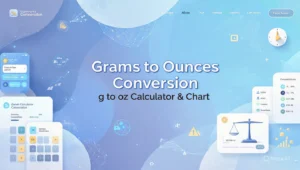
The Basic Formula for Converting Grams to Ounces
Understanding how to convert grams to ounces is an essential skill in many everyday situations. Whether you are following an international recipe, measuring ingredients in the kitchen, calculating nutritional values, or working with scientific measurements, knowing this simple conversion can save time and prevent mistakes.
Grams and ounces are both units used to measure weight or mass, but they belong to different measurement systems. Grams are part of the metric system, which is widely used around the world, while ounces belong to the imperial system, commonly used in the United States and a few other countries.
Learning the correct conversion method helps you easily switch between these two systems without confusion.
The Standard Conversion Formula
The grams to ounces conversion formula is straightforward once you understand the conversion factor between the two units.
Mathematical Formula Explanation
The relationship between grams and ounces is based on a fixed value:
1 gram = 0.03527396 ounces
This means every gram equals approximately 0.035 ounces.
The basic formula looks like this:
Ounces = Grams × 0.03527396
For most everyday uses, this number is often rounded to 0.0353.
Conversion Factor
A conversion factor is the number used to convert one measurement unit into another. In this case:
- Conversion factor: 0.03527396
- Used to convert grams → ounces
If converting the other way:
Grams = Ounces × 28.3495
This reciprocal relationship allows easy switching between both units.
Basic Equation Explanation
To convert grams to ounces:
- Take the number of grams.
- Multiply it by 0.03527396.
- The result is the equivalent value in ounces.
Example:
200 grams × 0.03527396 = 7.05 ounces (approx.)
This formula works for any value, from tiny measurements in baking to larger weights used in shipping or nutrition tracking.
Simple Examples of Grams to Ounces Conversion
Here are some common grams to ounces examples that frequently appear in recipes, food labels, and measurement charts.
1 Gram to Ounces
Using the formula:
1 g × 0.03527396 = 0.035 oz
Rounded result:
1 gram ≈ 0.04 ounces
50 Grams to Ounces
50 g × 0.03527396 = 1.76 oz
Rounded:
50 grams ≈ 1.76 ounces
This amount is common when measuring spices, chocolate, or baking ingredients.
100 Grams to Ounces
100 g × 0.03527396 = 3.53 oz
Rounded:
100 grams ≈ 3.53 ounces
This is one of the most commonly searched metric to imperial conversions.
250 Grams to Ounces
250 g × 0.03527396 = 8.82 oz
Rounded:
250 grams ≈ 8.82 ounces
Many international recipes use 250 grams, especially for butter, flour, or sugar.
Understanding Conversion Accuracy
While the formula is simple, accuracy matters, especially when working with precise measurements.
Importance of Precision
In some situations, a small difference can change the outcome significantly. For example:
- Baking recipes require exact ingredient ratios.
- Scientific experiments rely on precise data.
- Nutritional calculations need accurate values.
Even a small rounding difference can affect results when measurements accumulate.
Rounding Numbers
For everyday use, most people round to two decimal places.
Example:
3.527396 → 3.53 oz
This level of rounding is accurate enough for cooking, general measurements, and daily use.
When Precision Matters
Higher precision is important in areas such as:
- Pharmaceutical measurements
- Scientific research
- Laboratory work
- Professional baking
In those cases, using the full conversion value 0.03527396 is recommended.
Common Mistakes When Converting Measurements
Even though the process is simple, mistakes can still happen when converting grams to ounces.
Some errors are surprisingly common.
Misreading Decimal Values
Decimals can easily be misinterpreted.
Example mistake:
0.035 → read as 0.35
This changes the result by ten times.
Mixing Ounces and Fluid Ounces
Another frequent mistake is confusing:
- Ounces (oz) – unit of weight
- Fluid ounces (fl oz) – unit of volume
They are not interchangeable.
For example:
- 1 oz weight ≠ 1 fl oz liquid
Incorrect Rounding
Rounding too early in calculations can produce inaccurate results.
Instead, round only after finishing the calculation.
Tips to Avoid Conversion Errors
Here are a few practical tips to ensure accurate metric to imperial conversions.
Use Verified Calculators
Online measurement tools or conversion calculators help avoid manual mistakes.
Double-Check Measurement Units
Always confirm whether the unit is:
- grams (g)
- ounces (oz)
- fluid ounces (fl oz)
This prevents mixing weight with volume.
Understand Decimal Placement
Pay close attention to decimal points, especially when dealing with small measurements.
Even a tiny shift can drastically change the result.
Complete Grams to Ounces Conversion Chart
Sometimes, calculating each value manually can be inconvenient. A grams to ounces conversion chart provides a quick visual reference for commonly used weights.
These charts are especially helpful in kitchens, classrooms, and laboratories.
Quick Reference Table for Everyday Use
Below is a simple grams to ounces conversion table for small measurements.
| Grams | Ounces |
|---|---|
| 1 g | 0.04 oz |
| 5 g | 0.18 oz |
| 10 g | 0.35 oz |
| 20 g | 0.71 oz |
| 30 g | 1.06 oz |
| 40 g | 1.41 oz |
| 50 g | 1.76 oz |
| 60 g | 2.12 oz |
| 70 g | 2.47 oz |
| 80 g | 2.82 oz |
| 90 g | 3.17 oz |
| 100 g | 3.53 oz |
This quick conversion chart is perfect for everyday measurements like spices, baking ingredients, and portion sizes.
Medium Weight Conversion Table
For larger values often used in recipes or food packaging, here is a 100 grams to 1000 grams conversion chart.
| Grams | Ounces |
|---|---|
| 100 g | 3.53 oz |
| 200 g | 7.05 oz |
| 300 g | 10.58 oz |
| 400 g | 14.11 oz |
| 500 g | 17.64 oz |
| 600 g | 21.16 oz |
| 700 g | 24.69 oz |
| 800 g | 28.22 oz |
| 900 g | 31.75 oz |
| 1000 g | 35.27 oz |
These measurements commonly appear in international recipes and grocery packaging.
Large Weight Conversion Chart
For larger measurements, it is often easier to convert kilograms to ounces.
| Kilograms | Ounces |
|---|---|
| 1 kg | 35.27 oz |
| 2 kg | 70.55 oz |
| 3 kg | 105.82 oz |
| 4 kg | 141.10 oz |
| 5 kg | 176.37 oz |
This type of chart is useful for shipping weights, bulk ingredients, and food storage calculations.
Printable Conversion Guide
A printable grams to ounces chart can be extremely useful in daily life.
Instead of searching online every time, you can keep a quick reference nearby.
Benefits include:
- Faster measurement conversion
- Reduced calculation errors
- Easy access in kitchens or classrooms
- Helpful for students learning measurement systems
Many chefs and teachers keep printed conversion tables pinned to walls or inside notebooks.
Common places to use them include:
- Kitchen cabinets
- Recipe books
- Science classrooms
- Meal prep stations
When to Use a Conversion Chart Instead of a Calculator
While calculators are accurate, charts are often faster when:
- Converting frequently used values
- Cooking multiple ingredients
- Teaching measurement basics
- Working offline without internet access
A chart gives instant visual reference without typing numbers.
Using a Grams to Ounces Calculator
Modern tools make conversions even easier. A grams to ounces calculator can instantly convert measurements with perfect accuracy.
These tools are widely available online and in mobile apps.
What Is an Online Conversion Calculator?
An online unit converter is a digital tool that automatically converts values between measurement systems.
Instead of calculating manually, the system applies the conversion formula instantly.
How it works:
- User enters a number in grams.
- The system multiplies the value using the conversion factor.
- The equivalent value in ounces appears instantly.
Many modern converters support hundreds of units, including:
- grams to ounces
- kilograms to pounds
- milliliters to cups
- Celsius to Fahrenheit
Advantages of Automated Conversion Tools
Digital converters offer several benefits compared to manual calculations.
Speed
Results appear instantly without needing formulas.
Accuracy
The calculation uses precise conversion values.
Convenience
Available on websites, mobile apps, and even voice assistants.
Benefits of Using a Measurement Converter
A weight conversion tool is helpful in many everyday scenarios.
Speed and Convenience
Instead of remembering formulas, users can simply enter a value and get immediate results.
Accuracy
Automated tools reduce human error in calculations, especially with long decimal numbers.
Accessibility
Most converters are free and available across devices:
- smartphones
- tablets
- computers
This makes them ideal for quick measurements anytime.
How to Use a Weight Conversion Tool Step by Step
Using a grams to ounces converter usually takes only a few seconds.
Step 1 – Enter Value in Grams
Type the number you want to convert.
Example:
250 grams
Step 2 – Automatic Calculation to Ounces
The calculator multiplies the number using the conversion factor automatically.
Step 3 – Reading the Result
The output appears instantly.
Example result:
250 grams = 8.82 ounces
Some tools also provide additional conversions like pounds or kilograms.
Best Situations to Use a Converter Tool
Online converters are especially useful in situations requiring quick or frequent conversions.
Cooking
Many international recipes use metric measurements, while some kitchens use imperial units.
Fitness Tracking
Nutrition labels often use grams, but portion tracking may require ounces.
Academic Use
Students studying science or mathematics frequently convert between measurement systems.
Mobile Apps for Unit Conversion
Several mobile apps provide fast and reliable unit conversions.
Features often include:
- offline conversion capability
- hundreds of supported units
- voice input
- quick search functions
Popular converter apps allow users to convert grams to ounces, pounds, kilograms, and more within seconds.
With these tools, switching between measurement systems becomes effortless, whether you are cooking dinner, tracking nutrition, or solving a math problem.
Grams to Ounces in Cooking and Baking
Cooking is often described as an art, but baking is truly a science. Every ingredient contributes to the structure, flavor, and texture of a dish. Because of this, accurate measurement becomes essential. Around the world, recipes use different measurement systems—grams in many countries and ounces in others. Understanding how to convert grams to ounces helps home cooks and professional chefs follow international recipes successfully.
In simple terms, 1 ounce equals approximately 28.35 grams. Knowing this conversion makes it easier to adapt recipes from different regions and achieve consistent results in the kitchen.
Why Accurate Measurements Matter in Recipes
Precise ingredient measurements are one of the most important factors in successful cooking and baking. Even small differences in quantity can dramatically change the final result.
Baking Precision
Baking relies heavily on chemical reactions. Ingredients like flour, sugar, baking powder, and butter must be measured accurately to maintain the correct structure.
For example:
- Too much flour can make a cake dense and dry
- Too little flour may cause baked goods to collapse
- Incorrect sugar ratios can affect caramelization and moisture
When recipes list ingredients in grams, converting them correctly to ounces ensures the baking chemistry stays balanced.
Ingredient Balance
Recipes are designed with a specific ratio of ingredients. Converting grams to ounces incorrectly can disrupt this balance.
For instance, sauces and doughs rely on precise ingredient proportions. A slight miscalculation may affect:
- Texture
- Flavor intensity
- Moisture levels
Maintaining ingredient balance is particularly important when scaling recipes up or down.
Recipe Success
Professional chefs often emphasize consistency. Accurate conversions between grams and ounces allow cooks to recreate dishes reliably every time.
Consistency matters for:
- Restaurant kitchens
- Home baking projects
- Meal prep recipes
The more accurate the measurements, the more predictable the results.
Converting Recipe Ingredients from Grams to Ounces
Many ingredients in recipes are measured in grams, especially in European cookbooks. Converting them to ounces is simple once you understand the ratio.
Below are common kitchen ingredients and approximate conversions.
Flour
Flour is one of the most sensitive ingredients in baking. Different flour densities make weight-based measurements more reliable than volume.
Typical conversions:
- 100 grams flour ≈ 3.5 ounces
- 250 grams flour ≈ 8.8 ounces
- 500 grams flour ≈ 17.6 ounces
Because flour can compact easily, using a kitchen scale ensures accuracy.
Sugar
Sugar comes in different forms such as granulated, powdered, or brown sugar. Weight conversions remain relatively consistent.
Examples:
- 100 grams sugar ≈ 3.5 ounces
- 200 grams sugar ≈ 7.1 ounces
- 500 grams sugar ≈ 17.6 ounces
Weight measurements are especially useful when making syrups, candies, or caramel.
Butter
Butter is often sold in ounces in the United States but in grams in many other countries.
Common conversions:
- 50 grams butter ≈ 1.8 ounces
- 100 grams butter ≈ 3.5 ounces
- 250 grams butter ≈ 8.8 ounces
Accurate butter measurements affect the richness and texture of baked goods like cookies and pastries.
Chocolate
Chocolate is frequently measured by weight when used for baking or dessert preparation.
Typical conversions include:
- 100 grams chocolate ≈ 3.5 ounces
- 200 grams chocolate ≈ 7 ounces
- 300 grams chocolate ≈ 10.6 ounces
Precision matters when melting chocolate for ganache or tempering.
International Recipes and Measurement Differences
Cooking styles vary around the world, and so do measurement systems. Understanding these differences helps cooks explore global cuisines.
European Recipes Using Grams
Most European countries use the metric system, which measures ingredients in grams and milliliters.
Benefits of gram-based measurements include:
- Higher accuracy
- Easier scaling of recipes
- Consistency across different ingredients
Professional kitchens across Europe rely heavily on digital scales for this reason.
American Recipes Using Ounces
In contrast, many recipes from the United States use ounces and cups. While ounces measure weight, cups measure volume, which can lead to variations.
For example, one cup of flour can vary in weight depending on how tightly it is packed. This is why converting grams to ounces often produces more consistent baking results.
Cooking Tips When Converting Measurements
Converting between grams and ounces becomes easier with a few practical techniques.
Using Kitchen Scales
A digital kitchen scale is one of the most valuable tools in modern cooking. It allows precise measurement regardless of the unit used.
Advantages include:
- Accurate ingredient weighing
- Easy switching between grams and ounces
- Better recipe consistency
Many scales now include automatic unit conversion.
Measuring Dry vs Wet Ingredients
Dry and wet ingredients behave differently when measured.
Dry ingredients include:
- Flour
- Sugar
- Cocoa powder
Wet ingredients include:
- Milk
- Oil
- Water
Weight measurements (grams or ounces) are usually more reliable than volume measurements for both categories.
Professional Chef Measurement Techniques
Professional chefs often rely on several strategies to ensure accuracy.
Common techniques include:
- Using digital scales for all ingredients
- Weighing ingredients instead of measuring cups
- Recording ingredient ratios for repeatable recipes
These practices help maintain precision in both home kitchens and professional environments.
Grams to Ounces in Nutrition and Health Tracking
Beyond cooking, gram-to-ounce conversion plays an important role in nutrition and diet tracking. Many nutrition labels and health apps rely on grams, while some regions prefer ounces.
Understanding both units helps individuals track food intake more accurately.
Food Portion Measurement
Portion control is a key factor in maintaining a healthy diet. Accurate measurements help people understand how much they are actually consuming.
Tracking Calories
Calories often correlate with portion size. Measuring food in grams provides precise information about calorie intake.
For example:
- 100 grams of chicken breast contains about 165 calories
- 100 grams of rice contains roughly 130 calories
Converting grams to ounces helps people follow nutrition plans that use different measurement systems.
Measuring Protein Intake
Protein intake is especially important for athletes, fitness enthusiasts, and individuals maintaining muscle mass.
Typical measurements include:
- 100 grams chicken ≈ 3.5 ounces
- 150 grams fish ≈ 5.3 ounces
Tracking protein in grams is often more accurate than estimating portions visually.
Meal Planning
Meal planning frequently uses gram-based measurements for consistency. This allows people to prepare meals that match their daily nutritional targets.
Benefits include:
- Balanced macronutrients
- Predictable calorie intake
- Efficient grocery planning
Fitness and Diet Applications
Many fitness programs rely on precise food measurements to optimize health and performance.
Bodybuilding Diet Plans
Bodybuilders often measure meals carefully to maintain specific macronutrient ratios.
Typical meal tracking may include:
- 200 grams chicken
- 150 grams rice
- 100 grams vegetables
Converting these amounts into ounces helps athletes using imperial measurement systems.
Weight Management
Weight loss or maintenance often depends on portion control. Measuring food by weight helps reduce guesswork.
Accurate conversion ensures users can:
- Monitor calorie intake
- Adjust portion sizes
- Maintain diet consistency
Macro Nutrient Tracking
Macronutrients include protein, carbohydrates, and fats. Most diet tracking systems measure these nutrients in grams.
For example:
- Protein: 120 grams per day
- Carbohydrates: 200 grams per day
- Fat: 60 grams per day
Users who prefer ounces may convert these values for easier understanding.
Nutrition Labels and Unit Differences
Food packaging varies by region, which explains why some labels use grams while others use ounces.
Why Some Labels Use Grams
Countries that follow the metric system use grams because they provide precise measurements.
Advantages include:
- International standardization
- Easy scientific calculation
- Greater accuracy
Why Others Use Ounces
In the United States and a few other regions, ounces remain common in packaging and recipes.
Ounces are often preferred for:
- Familiarity with traditional cooking
- Simpler household measurement tools
However, many modern labels now include both grams and ounces.
Popular Health Apps That Use Gram Measurements
Most nutrition tracking apps rely on gram-based food databases.
Popular examples include:
- MyFitnessPal
- Cronometer
- Lose It!
- MacroFactor
These apps allow users to log food portions in grams and automatically convert nutrients.
Converting Food Portions for Accurate Diet Tracking
To track nutrition accurately, users should measure food with a digital scale and convert units when necessary.
Simple guidelines include:
- Weigh food before cooking when possible
- Use grams for precise macro tracking
- Convert to ounces if required by the diet plan
These habits improve the reliability of nutrition data.
Grams to Ounces for Shopping and Product Packaging
Conversions between grams and ounces are also important when purchasing products, especially online or internationally.
Different countries label product weights using different systems, which can create confusion for buyers.
International Online Shopping
Global e-commerce has made it common for people to purchase products from other countries.
Product Weights in Different Units
Online stores may list weights in:
- Grams (g)
- Kilograms (kg)
- Ounces (oz)
- Pounds (lb)
Understanding gram-to-ounce conversion helps shoppers compare product sizes accurately.
Understanding Package Labels
Product packaging often includes multiple units to accommodate international buyers.
Typical label example:
- Net weight: 200 g (7.05 oz)
This dual labeling improves clarity and helps customers make informed purchasing decisions.
Jewelry and Precious Metals Conversion
Precious metals are frequently measured using grams or ounces, particularly in investment and jewelry markets.
Gold Measurements
Gold is commonly priced per gram or per troy ounce.
Important distinction:
- 1 troy ounce ≈ 31.1 grams
Investors and buyers must understand this difference when comparing prices.
Silver Measurements
Silver is also often traded by the troy ounce. Jewelry pieces, however, may be labeled in grams.
Typical examples:
- 10 grams silver ring
- 1 troy ounce silver coin
Precious Stones
Gemstones like diamonds are usually measured in carats, but the weight of jewelry pieces may still be listed in grams or ounces.
Understanding weight conversions helps buyers evaluate value and pricing.
Cosmetic and Beauty Product Weights
Beauty and skincare products also rely on weight measurements for packaging and labeling.
Makeup Packaging
Makeup products such as powders, foundations, and lip balms are commonly labeled in grams.
Examples include:
- 5 g eyeshadow
- 30 g foundation
- 10 g lipstick
International brands often include ounce equivalents for global customers.
Skincare Products
Skincare packaging frequently shows both metric and imperial units.
For example:
- 50 g moisturizer (1.76 oz)
- 100 g cleanser (3.5 oz)
These labels help consumers compare product quantities more easily.
E-commerce Product Weight Standards
Online marketplaces typically require sellers to specify product weight clearly.
Common standards include:
- Net weight in grams
- Ounce equivalent for international buyers
- Shipping weight for logistics calculations
Clear weight information reduces confusion and improves buyer confidence.
Reading Product Labels Correctly
Understanding product labels is essential when comparing items.
Helpful tips include:
- Check both grams and ounces when available
- Confirm whether the weight refers to net content or packaging
- Compare price per gram or per ounce for better value
With global trade and international recipes becoming more common, the ability to convert grams to ounces has become a useful everyday skill.
Whether cooking a new recipe, tracking nutrition, or shopping online, understanding these measurement systems helps people make accurate decisions and avoid costly mistakes.
Scientific and Academic Use of Grams to Ounces
Measurement plays a critical role in science, research, and education. Among the most common conversions used worldwide is grams to ounces, especially when working across different measurement systems. While grams belong to the metric system, ounces are part of the imperial and US customary systems. Because scientific work often involves international collaboration, understanding how to convert between these units is essential.
A simple reference often used in research and education is:
- 1 gram = 0.035274 ounces
- 1 ounce = 28.3495 grams
Even though this conversion seems simple, precision matters greatly in scientific contexts. Accurate measurement ensures that experiments can be reproduced, data remains reliable, and research results maintain credibility across institutions worldwide.
Measurement in Laboratory Experiments
In laboratories, precise measurement is fundamental to obtaining valid results. Whether conducting chemical reactions, preparing biological samples, or measuring pharmaceutical compounds, researchers frequently work with grams and sometimes convert to ounces when required.
Scientific precision
Laboratory instruments such as analytical balances and digital scales can measure mass with extreme accuracy, sometimes up to 0.001 grams. This level of precision is necessary when dealing with chemical compounds or experimental samples where even a small deviation can change results.
When converting grams to ounces in scientific documentation, researchers typically use standardized conversion formulas to avoid rounding errors. Accurate conversions help maintain consistency in published studies and technical reports.
Standard unit systems
Science overwhelmingly relies on the International System of Units (SI), where grams and kilograms are the standard for measuring mass. However, researchers working with historical data, US-based institutions, or certain industries may still encounter ounces.
As a result, scientists often include both units in publications. For example:
- 50 grams (1.76 ounces) of sample material
- 250 grams (8.82 ounces) of solution
Including both values ensures clarity for international audiences.
Educational Use in Schools
Measurement conversion is an important part of mathematics and science education. Learning how to convert grams to ounces helps students understand both the metric and imperial systems.
Learning measurement systems
Schools around the world teach students about different measurement systems because both are still used globally. The metric system dominates science and international trade, while the imperial system remains common in countries such as the United States.
Students often practice conversions like:
- 100 grams to ounces
- 500 grams to ounces
- 1 kilogram to ounces
These exercises strengthen numerical reasoning and improve practical math skills.
Classroom exercises
Teachers frequently use hands-on activities to make measurement concepts easier to understand. Some common classroom exercises include:
- Weighing objects using digital scales
- Converting recipe ingredients between grams and ounces
- Comparing everyday items such as fruit, books, or classroom materials
By connecting measurement conversions to real-world objects, students can better grasp how units of mass relate to everyday life.
Engineering and Technical Fields
In engineering and technical industries, measurement accuracy can directly affect product quality, safety, and performance. Engineers working with materials, manufacturing processes, and industrial design often convert between grams and ounces depending on the project’s specifications.
Material measurement
Many materials used in engineering—such as metals, polymers, chemicals, or powders—are measured in grams when conducting laboratory tests. However, manufacturing documentation in some regions may still reference ounces.
Examples include:
- Powdered chemicals used in manufacturing processes
- Small mechanical components
- Precision electronics materials
Accurate conversion ensures that materials are used in the correct proportions.
Industrial applications
Industries such as food manufacturing, cosmetics, pharmaceuticals, and packaging regularly convert between grams and ounces when producing goods for global markets.
For example:
- A product might be manufactured using 500 grams of raw material but packaged and labeled as 17.64 ounces for US consumers.
- International companies often display dual-unit labels to comply with regulatory requirements in different countries.
Why the Metric System Is Preferred in Science
The metric system has become the global standard in scientific research because it offers simplicity, consistency, and scalability. Units are based on powers of ten, making calculations and conversions much easier than imperial units.
Key advantages include:
- Universal adoption in scientific research
- Easy conversion between units (grams, kilograms, milligrams)
- Reduced calculation errors
Because of these advantages, most scientific publications and research institutions rely exclusively on metric measurements.
Conversion in International Research Collaboration
Modern research frequently involves collaboration between scientists in different countries. While most researchers use the metric system, some partners—particularly in the United States—may still encounter ounce-based measurements in industry data.
To maintain clarity, researchers often include conversion values directly in documentation. This practice ensures that all collaborators interpret measurements accurately regardless of their preferred unit system.
Digital Tools That Help Convert Grams to Ounces
Today, converting grams to ounces is easier than ever thanks to digital tools. Online calculators, mobile apps, and smart assistants can perform accurate conversions instantly.
These tools are especially useful for students, professionals, and home users who need quick measurement calculations.
Online Measurement Conversion Websites
Online conversion websites are among the most popular tools for converting measurement units.
Features and benefits
Most measurement conversion websites provide several helpful features:
- Instant conversion results
- Multiple unit options (grams, ounces, pounds, kilograms)
- Simple user interfaces
- Free access without installation
Users only need to enter a value in grams, and the website automatically calculates the equivalent in ounces.
Accuracy comparison
Reputable conversion platforms rely on internationally recognized constants, ensuring highly accurate results. The most reliable sites use the official value:
1 gram = 0.0352739619 ounces
Because the calculation is standardized, most conversion tools produce identical results.
Mobile Conversion Apps
Mobile apps make it easy to convert measurements anywhere, whether in the kitchen, classroom, or workplace.
Quick conversions on the go
With a mobile conversion app, users can quickly convert grams to ounces while shopping, cooking, or traveling. Many apps allow offline use, which is helpful when internet access is limited.
Multi-unit converters
Most modern conversion apps support dozens or even hundreds of units, including:
- Mass units (grams, ounces, pounds)
- Length units (meters, inches)
- Volume units (liters, cups)
- Temperature conversions
These apps function as all-in-one measurement tools.
Smart Assistants and Voice Conversion
Voice-enabled technology has made unit conversion even more convenient.
Voice commands
Smart assistants such as voice-enabled AI tools allow users to perform conversions by simply speaking a command, such as:
- “Convert 200 grams to ounces.”
- “How many ounces are in 500 grams?”
The system instantly provides the answer without requiring manual calculation.
AI powered tools
Modern AI-powered tools can also perform complex conversions, compare units, and even assist with recipe adjustments or engineering calculations.
These tools are increasingly integrated into smartphones, smart speakers, and digital assistants.
Browser Extensions for Unit Conversion
Browser extensions provide another convenient way to convert units while browsing the internet.
Many extensions automatically detect measurement units on webpages and display conversions alongside them. For example, when viewing a recipe that lists grams, the extension may automatically show the equivalent in ounces.
This feature is particularly useful when reading international cooking blogs, product specifications, or research papers.
Spreadsheet Conversions Using Excel or Google Sheets
Spreadsheet software such as Microsoft Excel and Google Sheets can also perform accurate conversions between grams and ounces.
Users can create simple formulas like:
= A1 * 0.035274
If cell A1 contains a value in grams, the formula automatically converts it to ounces.
This method is often used by researchers, data analysts, and businesses that handle large datasets involving measurement units.
Practical Examples of Grams to Ounces in Daily Life
Outside of science and engineering, grams-to-ounces conversions appear frequently in everyday situations. From cooking to shopping and creative hobbies, understanding these units can make many tasks easier.
Kitchen Cooking Examples
Cooking is one of the most common situations where measurement conversion is needed.
Baking cookies
Many baking recipes use grams for ingredients such as flour, sugar, or butter. However, some cookbooks—especially in the United States—list quantities in ounces.
For example:
- 200 grams of flour ≈ 7.05 ounces
- 100 grams of sugar ≈ 3.53 ounces
Accurate conversion helps ensure baked goods maintain the correct texture and flavor.
Preparing sauces
Sauces often require precise ingredient ratios. Converting grams to ounces allows cooks to adapt recipes from international sources.
Measuring spices
Small amounts of spices may be listed in grams in professional recipes. Converting these values to ounces helps cooks use the correct proportions.
Grocery Shopping Examples
Consumers may also encounter both grams and ounces when purchasing food products.
Buying meat
Meat packages in supermarkets often display weight in grams in some countries and ounces or pounds in others. Understanding conversions helps shoppers compare prices and quantities.
Buying vegetables
Fresh produce can also be sold using different units depending on the store or region.
Comparing product sizes
Food packaging frequently includes dual labeling, such as:
- 500 g (17.6 oz)
- 250 g (8.8 oz)
This allows international consumers to understand product sizes easily.
DIY and Craft Projects
Creative hobbies also involve careful measurement of materials.
Candle making
Candle makers measure wax, fragrance oils, and dyes in grams to maintain consistent product quality. Some suppliers, however, list ingredients in ounces.
Soap making
Soap recipes require precise proportions of oils, lye, and additives. Converting grams to ounces helps crafters follow recipes from different countries.
Resin crafting
Artists who work with resin must measure components accurately to ensure proper curing. Conversions between grams and ounces are common when following online tutorials.
Small Business and Home Industry Uses
Many small businesses and home-based industries rely on accurate measurement conversions. Examples include:
- Handmade candle businesses
- Homemade cosmetics production
- Food startups and baking businesses
Understanding grams to ounces helps entrepreneurs adapt recipes, standardize production, and label products correctly for different markets.
Online Recipe Conversion Stories
The growth of global food blogs and cooking communities has increased the need for measurement conversions. A recipe written in Europe might list ingredients in grams, while readers in the United States may prefer ounces.
As a result, many recipe creators now include automatic measurement converters on their websites. This feature allows readers to switch between grams, ounces, cups, and other units instantly.
This simple tool has helped international cooking communities grow, making recipes accessible to millions of people regardless of their preferred measurement system.
Frequently Asked Questions About Grams to Ounces
Understanding how grams convert to ounces is useful in many everyday situations. From cooking and baking to shipping packages and measuring ingredients, these two units of measurement often appear together. Because grams belong to the metric system and ounces belong to the imperial system, many people need to convert between them regularly.
Below are some of the most common questions people ask about grams to ounces, along with simple explanations to help you understand the relationship between these two units.
How Many Ounces Are in One Gram?
One gram equals 0.035274 ounces. This means that grams are smaller units than ounces, so it takes several grams to equal one ounce.
For practical use, the conversion is often simplified:
- 1 gram ≈ 0.035 ounces
- 28.35 grams ≈ 1 ounce
This conversion is widely used in cooking, nutrition labels, and international trade. For example:
- 100 grams ≈ 3.53 ounces
- 250 grams ≈ 8.82 ounces
- 500 grams ≈ 17.64 ounces
Because of this relationship, many digital kitchen scales allow users to switch easily between grams and ounces depending on their needs.
How Do You Convert Grams to Ounces Quickly?
There are several easy ways to convert grams to ounces without complicated calculations.
1. Use a Simple Formula
The standard formula is:
Ounces = Grams × 0.035274
For example:
200 grams × 0.035274 ≈ 7.05 ounces
2. Use an Approximation
For quick everyday conversions, many people remember:
28 grams ≈ 1 ounce
So if you want to convert 56 grams:
56 ÷ 28 ≈ 2 ounces
This method works well for cooking and rough estimates.
3. Use a Conversion Chart
Many cooks and professionals keep small reference charts such as:
| Grams | Ounces |
|---|---|
| 10 g | 0.35 oz |
| 50 g | 1.76 oz |
| 100 g | 3.53 oz |
| 250 g | 8.82 oz |
| 500 g | 17.64 oz |
4. Use Digital Tools
Today, conversion calculators, smartphone apps, and smart kitchen scales can instantly convert grams to ounces. These tools are especially helpful when accuracy matters.
Why Do Some Countries Use Ounces Instead of Grams?
The reason comes down to measurement systems used in different parts of the world.
Most countries use the metric system, which includes units like grams, kilograms, meters, and liters. The metric system is standardized and widely adopted because it is easy to scale using powers of ten.
However, a few countries still commonly use the imperial or customary system, which includes ounces, pounds, inches, and gallons. The United States is the most well-known example.
Here are the typical preferences:
Metric System (grams commonly used):
- Europe
- Asia
- Australia
- South America
- Africa
Imperial / US Customary System (ounces commonly used):
- United States
- Some industries in the United Kingdom
- Certain international trade sectors
Because global commerce and international recipes are common today, knowing how to convert grams to ounces helps people work across these systems easily.
Is an Ounce the Same as a Fluid Ounce?
No, an ounce and a fluid ounce measure different things.
This is a common source of confusion.
Ounce (oz)
- Measures weight or mass
- Used for ingredients like flour, sugar, or meat
Fluid Ounce (fl oz)
- Measures volume
- Used for liquids like milk, water, or oil
For example:
- 8 ounces of flour measures weight
- 8 fluid ounces of milk measures volume
Even though the numbers look similar, they represent different types of measurement. The conversion between fluid ounces and grams depends on the density of the substance, which means there is no single universal formula.
Which Is More Accurate: Grams or Ounces?
Both grams and ounces can be accurate, but grams are generally considered more precise, especially in scientific and technical applications.
There are several reasons for this.
1. Metric System Precision
The metric system is based on decimals, which makes calculations simpler and more consistent. Converting between grams and kilograms, for example, only requires moving the decimal point.
2. Smaller Measurement Units
Grams are smaller units than ounces, which allows for more precise measurement. This is particularly useful in:
- Baking
- Chemistry
- Pharmaceuticals
- Nutrition tracking
3. Scientific Standard
Most scientific research worldwide uses metric measurements. As a result, grams are the preferred unit for laboratories, medicine, and engineering.
However, ounces are still widely used in everyday life, especially in countries where the imperial system remains common.
Conclusion: Why Understanding Grams to Ounces Conversion Is Useful
Learning how to convert grams to ounces might seem like a small skill, but it can make everyday tasks much easier. In a world where recipes, products, and information come from many different countries, understanding both metric and imperial units helps people communicate and work more effectively.
The Importance of Measurement Knowledge
Measurement knowledge plays a key role in many areas of daily life. Accurate measurements are essential for:
- Cooking and baking
- Nutrition tracking
- Shipping and logistics
- Manufacturing
- Scientific research
Even small measurement errors can affect results, especially in cooking or technical work. Knowing how to convert grams to ounces helps ensure accuracy and consistency.
How Conversion Skills Simplify Daily Life
Being able to convert units quickly saves time and reduces confusion. For example, you might encounter situations like:
- A European recipe listing ingredients in grams
- A US nutrition label showing ounces
- Online shopping products measured in different systems
- International shipping weight limits
Instead of guessing or making mistakes, simple conversion knowledge allows you to adjust measurements confidently.
Using Technology for Faster Conversions
Technology has made measurement conversions easier than ever. Today you can use:
- Online conversion calculators
- Smartphone apps
- Voice assistants
- Digital kitchen scales with dual units
These tools provide instant results and reduce the chance of calculation errors.
Smart kitchen scales are especially helpful because they allow users to switch between grams, ounces, pounds, and milliliters with a single button.
Final Thoughts on Measurement Accuracy
Understanding measurement systems is a practical skill that benefits both personal and professional activities. Whether you’re cooking at home, managing shipments, or working in a technical field, accurate conversions ensure better outcomes.
As global connections continue to grow, the ability to move between metric and imperial units becomes even more valuable.
Encouragement to Use Conversion Tools
If you frequently work with recipes, shipping weights, or nutrition labels, consider using reliable conversion tools. Digital calculators, apps, and smart scales can make grams to ounces conversion quick and effortless.
With just a little practice, converting between grams and ounces becomes second nature—helping you work faster, avoid mistakes, and feel more confident when dealing with measurements.