📐 Acreage Calculator: Easy Way to Measure Land Area Online
Measure land area accurately with complete shape options, multi-unit conversion, and professional field planning insights.
How to use: Choose plot shape, enter dimensions, select unit, then add optional deductions and safety margin.
Best practice: Enter realistic values and use measured dimensions from survey maps for professional-grade estimates.
🧾 Land Profile
📏 Shape Dimensions
🧩 Mixed Multi-Plot Builder
⚙ Advanced Adjustments
🧩 Output Preferences
Important: This tool is for estimation and planning. For legal land transactions, always use certified survey documents.
📊 Acreage Result Summary
🧮 Detailed Breakdown
📘 Formula & Calculation Steps
🌱 Practical Land Planning Insights
🌐 International Unit Conversion Table
| Unit | Value | Quick Reference |
|---|
Land measurement has always played a crucial role in human civilization. From agriculture and farming to real estate development and urban planning, knowing the exact size of a piece of land helps people make informed decisions. In the modern era, digital tools have made this process significantly easier and more accurate. One of the most practical tools available today is the acreage calculator, a digital solution designed to quickly determine the size of land areas in acres and other measurement units.
In the past, calculating land size often required complex manual measurements, professional surveying tools, and plenty of time. Farmers, property developers, engineers, and landowners relied heavily on physical measuring tapes, chains, and mathematical formulas to determine land area. While these traditional methods were effective, they could be time-consuming and prone to human error.
Today, technology has simplified this process. Online measurement tools and digital mapping platforms allow users to calculate land areas in just a few seconds. By entering simple data such as length and width, coordinates, or map boundaries, a modern acreage calculator can instantly provide accurate results. This efficiency makes it extremely useful for anyone dealing with land management, agricultural planning, or property investment.
Another reason these tools have become increasingly popular is the rapid growth of digital mapping technologies. GPS systems, satellite imagery, and geographic information systems (GIS) have transformed how land is measured and analyzed. Instead of manually measuring each boundary, users can simply draw a plot on an online map and let the system automatically calculate the acreage.
For farmers, this technology helps with crop planning, irrigation management, and fertilizer distribution. Real estate professionals use it to estimate property value and analyze development potential. Surveyors and engineers rely on it for quick preliminary calculations before conducting detailed land assessments.
In addition, an acreage calculator often supports multiple measurement units, making it easier to convert land sizes between acres, square feet, hectares, square meters, and other common units. This feature is particularly useful for international users, as different countries rely on different land measurement systems.
The demand for accurate land measurement tools continues to grow as land becomes an increasingly valuable resource. With expanding populations, urban development, and agricultural needs, understanding land size and boundaries is more important than ever. Digital calculators provide a convenient, accessible, and reliable way to perform these calculations without requiring specialized expertise.
In this guide, we will explore how an acreage calculator works, the different types of land measurement tools available today, and how these calculators can be used across industries such as agriculture, real estate, construction, and land surveying. We will also discuss the basic principles of acreage measurement, practical usage tips, and the future of digital land measurement technologies.
Understanding Acreage Calculator and Land Measurement Basics
Land measurement is one of those topics that looks simple on the surface but quickly becomes complex once you start dealing with real-world land shapes, conversions, and tools. Whether you’re a property owner, real estate investor, farmer, surveyor, or just someone curious about land size, understanding how acreage works is essential.
An acreage calculator is a practical tool that helps convert and compute land area quickly and accurately. But to fully use it effectively, you need a solid grasp of the basics—what an acre actually represents, how it converts into other units, and how different measurement systems interact.
What Exactly Is an Acre?
An acre is a unit of land area commonly used in countries that follow or historically used the imperial system, such as the United States, the United Kingdom, and several others.
In simple terms, an acre is a standardized way to measure land size. It is widely used in:
- Real estate transactions
- Agriculture and farming
- Land development planning
- Property taxation
One acre is defined as:
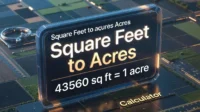
- 43,560 square feet
This number may seem random, but it comes from historical farming practices, which we’ll explore shortly.
Why Is Acre Still Used Today?
Even though metric units like square meters and hectares are widely used globally, the acre remains popular because:
- It is deeply embedded in real estate systems
- It provides a convenient scale for medium-sized land
- Many legal documents still use acres
Acre to Square Feet Conversion
The most common conversion people use is from acres to square feet.
1 acre = 43,560 square feet
This conversion is especially useful in:
- Property listings
- Construction planning
- Residential land measurement
Example:
If you have 2 acres of land:
2 × 43,560 = 87,120 square feet
This helps you visualize how much space you’re dealing with, especially for building layouts or subdivisions.
Acre to Hectare Conversion
For international use, converting acres to hectares is important.
1 acre = 0.4047 hectares
1 hectare = 2.471 acres
Hectares are commonly used in:
- Agriculture (especially in Europe and Asia)
- Government land records
- Environmental studies
Example:
5 acres × 0.4047 = 2.0235 hectares
Acre to Square Meters Conversion
In countries that fully use the metric system, square meters are the standard unit.
1 acre = 4,046.86 square meters
This is useful when:
- Comparing land internationally
- Working with engineers or architects
- Using GIS mapping systems
Example:
3 acres × 4,046.86 = 12,140.58 square meters
History of Acre Measurement
The concept of an acre dates back centuries and is rooted in agriculture.
Originally, an acre was defined as:
The amount of land a farmer could plow in one day using a yoke of oxen.
This definition naturally varied depending on:
- Soil type
- Terrain
- Strength of animals
Eventually, to standardize things, the acre was fixed at 43,560 square feet under the British Imperial system.
Acre in the Imperial System
The imperial system includes:
- Inches
- Feet
- Yards
- Miles
An acre fits neatly into this system:
- 1 acre = 4,840 square yards
- 1 acre = 1/640 of a square mile
Despite the global shift to metric units, the acre remains a key unit in many countries due to historical continuity.
Common Units Used in Land Measurement
Understanding different land measurement units helps you interpret data correctly and switch between systems when needed.
Acres
- Used in: US, UK, parts of Asia
- Best for: Medium to large land parcels
Hectares
- Used globally (metric system)
- Best for: Agricultural land and large plots
Square Feet
- Used in: Residential and commercial property
- Best for: Small to medium plots
Square Meters
- Standard metric unit
- Widely used in construction and planning
Square Miles
- Used for: Very large land areas (cities, regions)
Each unit serves a purpose depending on scale and context. A good acreage calculator typically supports all these conversions.
How an Acreage Calculator Works
An acreage calculator simplifies land measurement by applying mathematical formulas and sometimes integrating advanced technologies like GPS and satellite data.
Instead of manually calculating area, you input dimensions or coordinates, and the tool instantly provides results.
Basic Formula Used in Land Area Calculations
At its core, land measurement relies on basic geometry.
Rectangular Land Formula
The simplest case is a rectangle:
Area = Length × Width
Example:
Length = 100 meters
Width = 50 meters
Area = 100 × 50 = 5,000 square meters
Then convert:
5,000 ÷ 4,046.86 = 1.235 acres
Square Land Formula
If all sides are equal:
Area = Side × Side
Converting Units Within Calculations
Modern acreage calculators handle:
- Feet to meters
- Acres to hectares
- Square meters to square feet
This removes the need for manual conversions and reduces errors.
Calculating Irregular Land Shapes
Most real-world land is not perfectly rectangular. This is where things get more interesting.
Irregular land requires breaking the area into smaller, manageable shapes.
Triangulation Method
Divide the land into triangles.
Formula:
Area = (Base × Height) / 2
Add all triangle areas together to get total land size.
Polygon Method
Used for more complex shapes.
Steps:
- Divide land into multiple polygons
- Calculate each area
- Sum all areas
This method is commonly used in:
- Surveying
- GIS systems
- Engineering projects
Using Coordinates in Digital Acreage Calculators
Modern tools allow users to calculate land using GPS coordinates instead of manual measurements.
You simply input or map points on a digital map, and the calculator determines the area.
GPS-Based Land Area Calculation
GPS-based tools work by:
- Capturing latitude and longitude points
- Connecting those points into a polygon
- Calculating the enclosed area
Benefits:
- High accuracy
- Real-time measurement
- No manual measuring tools needed
This is especially useful for:
- Farmers
- Land surveyors
- Field engineers
Satellite Mapping and Land Measurement
Satellite mapping takes things further.
Using tools like GIS and mapping platforms, users can:
- Draw boundaries directly on satellite images
- Measure terrain without physically visiting the site
- Analyze land features
Advantages:
- Visual clarity
- Accessibility from anywhere
- Integration with geographic data
Types of Acreage Calculator Tools
There are many types of acreage calculators available today, each designed for different levels of use—from casual users to professionals.
Online Acreage Calculator Tools
Web-based calculators are the most accessible option.
You simply:
- Enter dimensions
- Select units
- Get instant results
Features often include:
- Unit conversion
- Simple UI
- Free access
Popular uses:
- Quick property estimates
- Real estate comparisons
- Basic land planning
Mobile Apps for Land Area Calculation
Smartphone apps have made land measurement even more convenient.
These apps often include:
- GPS tracking
- Map integration
- Real-time calculation
You can walk around your land while the app records the boundary automatically.
Benefits:
- Portability
- Ease of use
- Instant results
Common users:
- Farmers
- Surveyors
- Property developers
GIS-Based Acreage Calculators
GIS (Geographic Information Systems) tools are used by professionals.
They provide:
- Advanced mapping capabilities
- Data layering (soil, elevation, zoning)
- Highly accurate calculations
GIS tools are commonly used in:
- Urban planning
- Environmental studies
- Infrastructure development
These systems go beyond simple measurement—they provide deep insights into land characteristics.
Manual vs Digital Land Area Calculation Tools
There are two main approaches to land measurement: traditional (manual) and digital.
Manual Methods
Include:
- Measuring tapes
- Chains
- Surveying equipment
Pros:
- No technology required
- Useful in remote areas
Cons:
- Time-consuming
- Prone to human error
Digital Methods
Include:
- Online calculators
- GPS apps
- GIS software
Pros:
- Fast and accurate
- Easy to use
- Scalable
Cons:
- Requires devices and connectivity
- Learning curve for advanced tools
Which One Should You Use?
It depends on your needs:
- Casual use → Online acreage calculator
- Field work → Mobile GPS app
- Professional planning → GIS system
Step-by-Step Guide to Using an Acreage Calculator
An acreage calculator is a practical tool designed to help you measure land area quickly and accurately. Whether you are a farmer, real estate professional, land surveyor, or simply someone planning to buy land, understanding how to calculate acreage is essential. In this guide, we will walk through different methods, from simple manual calculations to advanced digital tools.
Measuring Rectangular Land Areas
The simplest way to calculate land area is when the shape is rectangular. This method is widely used because many plots are roughly rectangular.
Cara menghitung acreage dari panjang dan lebar can be done using a straightforward formula. First, measure the length and width of the land in feet or meters. Then multiply the two values to get the total area.
For example:
- Length = 200 feet
- Width = 150 feet
Area = 200 × 150 = 30,000 square feet
To convert square feet into acres, divide by 43,560 (since 1 acre = 43,560 square feet):
30,000 ÷ 43,560 ≈ 0.69 acres
This method is quick and effective for flat, regularly shaped land. Many online acreage calculator tools automate this process and provide instant results.
Measuring Irregular Land Plots
Not all land comes in neat rectangular shapes. In reality, many plots are irregular and require a more flexible approach.
Cara membagi area menjadi beberapa bagian is the most common strategy. You can divide the land into smaller sections such as rectangles, triangles, or trapezoids. Then calculate each section individually and sum them together.
Steps:
- Sketch the land shape on paper.
- Divide it into simple geometric shapes.
- Measure each section.
- Calculate each area separately.
- Add all areas to get total acreage.
This method improves accuracy and is often used in land surveying and property analysis.
Using Map-Based Acreage Calculators
Modern technology has made land measurement easier than ever. Map-based acreage calculators allow users to measure land directly on digital maps.
Menggunakan peta digital untuk menghitung area provides convenience and precision, especially for large or remote areas.
Drawing Land Boundaries on Maps
Most map tools allow you to draw boundaries by clicking points around your land. Once the boundary is closed, the system automatically calculates the area.
Tips:
- Zoom in for better accuracy
- Follow property lines closely
- Double-check boundary points
Calculating Acreage with GPS Pins
Another method is using GPS pins. You place markers at key points around the land, and the tool calculates the total area.
This method is especially useful for:
- Large farmland
- Forest areas
- Remote properties
Benefits of Using an Acreage Calculator
Using an acreage calculator offers multiple advantages across industries.
Faster Land Measurement
Manual calculations can take time, especially for complex plots. An acreage calculator speeds up the process significantly, providing instant results.
Improved Accuracy in Land Area Calculation
Accuracy is critical in land measurement. Digital tools reduce human error and provide more reliable data.
Easy Conversion Between Land Units
Many calculators support conversions between units such as:
- Acres
- Square feet
- Square meters
- Hectares
This flexibility is helpful when working with international standards.
Useful for Agriculture and Farming
Farmers rely on accurate land measurement for crop planning, irrigation, and budgeting.
Practical for Real Estate Professionals
Real estate agents and developers use acreage data to determine property value and make informed investment decisions.
Acreage Calculator for Different Industries
Agriculture and Farm Planning
Menghitung luas lahan pertanian is essential for efficient farm management. Knowing the exact size helps farmers allocate resources properly.
Perencanaan penanaman becomes easier when you know how much land is available. Farmers can decide which crops to plant and how to rotate them.
Real Estate and Property Development
Estimasi nilai tanah depends heavily on land size. Larger plots typically have higher value, but location and usability also matter.
Analisis investasi properti requires accurate acreage data to evaluate return on investment and development potential.
Land Surveying and Engineering
Digunakan oleh surveyor profesional, acreage calculators are essential tools in surveying. Engineers use them for planning infrastructure and ensuring compliance with regulations.
Construction and Infrastructure Projects
Perencanaan pembangunan requires precise land measurement. Acreage calculators help determine space requirements for buildings, roads, and utilities.
Acreage Calculator for Farming and Land Management
Calculating Farm Size for Crop Planning
Understanding farm size is crucial for planning crop distribution. Different crops require different spacing and conditions.
Determining Fertilizer and Seed Requirements
Farmers calculate input needs based on acreage. This ensures efficient use of resources and reduces waste.
Irrigation Planning Based on Land Area
Water management is a key factor in agriculture. Accurate acreage helps design effective irrigation systems.
Acreage Calculation for Crop Rotation
Crop rotation improves soil health and productivity. Knowing exact land size allows farmers to divide fields properly.
Estimating Agricultural Productivity
By combining acreage data with yield estimates, farmers can predict total production and plan for market demand.
Additional Insights: Modern Trends in Acreage Calculation
With advancements in technology, acreage calculation is becoming more sophisticated. Tools now integrate satellite imagery, drones, and AI to provide highly accurate land measurements.
Integration with GIS Systems
Geographic Information Systems (GIS) allow users to analyze land data in detail. Acreage calculators integrated with GIS provide insights into terrain, soil type, and land usage.
Mobile Apps for On-the-Go Measurement
Many mobile apps now offer acreage calculation features. Users can measure land directly from their smartphones using GPS.
Drone-Based Land Measurement
Drones capture aerial images that can be processed to calculate land area with high precision. This is especially useful for large-scale farming and construction projects.
Common Mistakes to Avoid
Even with advanced tools, mistakes can occur. Some common errors include:
- Incorrect measurements
- Ignoring land slope
- Misplacing boundary points
Tips for Accurate Acreage Calculation
- Always double-check measurements
- Use reliable tools
- Combine multiple methods when possible
Online Acreage Calculator vs Manual Land Measurement
Land measurement has evolved significantly over time. What once relied heavily on manual tools like measuring tapes, chains, and surveying instruments has now shifted toward digital solutions such as online acreage calculators and Geographic Information Systems (GIS). In today’s fast-moving world, accuracy, speed, and efficiency are critical—especially for farmers, real estate professionals, land developers, and property owners.
This article explores the differences between online acreage calculators and traditional land measurement methods, compares their accuracy and usability, and explains how modern technologies like GIS are transforming the way we measure land.
Accuracy Comparison
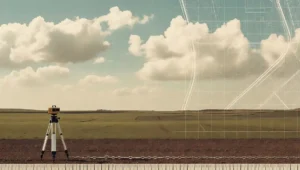
Accuracy is one of the most important factors when calculating land area. Traditional land measurement methods often rely on physical tools such as measuring tapes, surveyor’s chains, and theodolites. While these tools can produce highly accurate results when used by experienced professionals, they are prone to human error. Slight miscalculations, improper alignment, or environmental interference can affect the final measurement.
Online acreage calculators, on the other hand, use digital algorithms to compute land area based on user input or mapped coordinates. When paired with GPS data or satellite imagery, these tools can deliver highly precise results. However, the accuracy depends heavily on the quality of input data. Incorrect coordinates or poorly drawn boundaries can lead to inaccurate calculations.
Overall, digital tools tend to offer higher consistency, while manual methods depend more on user expertise.
Speed and Convenience
Manual land measurement is time-consuming. Surveyors must physically visit the land, set up equipment, and carefully measure distances. For large or irregularly shaped plots, this process can take hours or even days.
Online acreage calculators provide near-instant results. Users can simply input measurements, draw boundaries on a map, or upload coordinate data. Within seconds, the tool calculates the total acreage. This makes digital tools ideal for quick estimations and preliminary planning.
Convenience is another major advantage. Online tools are accessible from anywhere with an internet connection, allowing users to measure land without being physically present on-site.
Cost and Accessibility
Traditional land measurement often requires hiring professional surveyors, which can be expensive depending on the size and complexity of the land. Equipment costs and labor fees add up quickly.
Online acreage calculators are typically free or low-cost. Many platforms offer basic features at no charge, making them accessible to individuals and small businesses. This democratizes land measurement, allowing more people to access accurate tools without significant financial investment.
Advantages of Digital Land Calculators
Digital land calculators offer several key benefits:
- Quick and efficient calculations
- User-friendly interfaces
- Integration with maps and satellite imagery
- Accessibility from multiple devices
- Reduced human error in calculations
These advantages make online tools especially useful for modern applications such as real estate planning, agricultural management, and land development.
Limitations of Traditional Land Measurement
While traditional methods remain valuable, they come with limitations:
- Time-intensive processes
- Dependence on skilled professionals
- Higher operational costs
- Susceptibility to human error
Despite these drawbacks, manual measurement is still essential for legal surveys and official documentation.
Acreage Calculator and GIS Technology
The integration of acreage calculators with GIS technology has revolutionized land measurement. GIS enables users to analyze spatial data, visualize land boundaries, and calculate area with exceptional accuracy.
Integration with Geographic Information Systems
GIS combines mapping software with data analysis tools to provide detailed insights into land properties. Online acreage calculators that integrate with GIS can automatically calculate area based on mapped boundaries.
This integration allows users to:
- Analyze land use patterns
- Measure irregular shapes accurately
- Overlay multiple data layers
- Access real-time geographic data
Mapping Tools for Accurate Land Measurement
Modern mapping tools allow users to draw land boundaries directly on digital maps. These tools often include features like zooming, snapping to points, and measuring distances in real time.
Accurate mapping tools reduce the likelihood of errors and provide visual confirmation of measurements. This is especially useful for complex or irregular land shapes.
Satellite Imagery and Digital Mapping
Satellite imagery has become a cornerstone of digital land measurement. High-resolution images provide detailed views of terrain, boundaries, and natural features.
Digital mapping tools use satellite data to enhance accuracy and provide context. Users can identify landmarks, verify boundaries, and adjust measurements accordingly.
Role of GIS in Modern Land Analysis
GIS plays a crucial role in modern land analysis by combining spatial data with analytical tools. It allows users to:
- Evaluate land suitability
- Monitor environmental changes
- Plan infrastructure projects
- Optimize agricultural practices
GIS has become indispensable in industries such as urban planning, agriculture, and environmental management.
Future of Smart Land Measurement
The future of land measurement lies in smart technologies. Innovations such as drone mapping, AI-powered analysis, and real-time data integration are transforming the field.
Smart land measurement tools will offer:
- Automated boundary detection
- Real-time accuracy updates
- Integration with IoT devices
- Enhanced predictive analytics
These advancements will make land measurement faster, more accurate, and more accessible than ever before.
Common Mistakes When Using an Acreage Calculator
While online acreage calculators are powerful tools, users often make mistakes that affect accuracy. Understanding these common errors can help improve results.
Incorrect Unit Conversion
One of the most frequent mistakes is incorrect unit conversion. Users may confuse square meters, hectares, acres, and square feet. Even a small conversion error can significantly impact the final calculation.
Misreading Land Boundaries
Incorrectly identifying land boundaries is another common issue. When using digital maps, users may draw boundaries that do not accurately reflect the actual property lines.
Ignoring Terrain Variations
Most online calculators assume flat terrain. However, real-world land often includes slopes, hills, and uneven surfaces. Ignoring these variations can lead to underestimation or overestimation of land area.
Entering Incorrect Measurements
Simple input errors, such as typing the wrong numbers or misplacing decimal points, can lead to inaccurate results. Always verify measurements before calculating.
Tips to Improve Accuracy When Calculating Acreage
Improving accuracy requires a combination of careful measurement and the right tools. The following tips can help ensure more reliable results.
Double Checking Measurements
Always verify your measurements before entering them into a calculator. Cross-check data from multiple sources if possible.
Using GPS Coordinates
GPS technology provides precise location data that can enhance accuracy. Many acreage calculators allow users to input coordinates directly.
Combining Survey Data with Digital Tools
For the best results, combine traditional survey data with digital tools. This approach leverages the strengths of both methods.
Professional Survey vs Online Calculation
Professional surveys provide legally recognized measurements and are essential for property transactions. Online calculations are ideal for quick estimates and planning purposes.
In many cases, using both methods together offers the most accurate and practical solution.
Acreage Calculator for Real Estate Investors
An acreage calculator has quietly become one of the most essential digital tools in modern real estate investing. Whether you’re analyzing raw land, evaluating farmland, planning subdivisions, or assessing development potential, understanding land size accurately is the foundation of every profitable decision.
In simple terms, an acreage calculator helps convert measurements—whether in square feet, square meters, hectares, or irregular plot coordinates—into acres. But for real estate investors, its role goes far beyond conversion. It becomes a strategic tool for pricing, feasibility analysis, zoning compliance, and long-term investment planning.
Real estate markets in 2026 are more data-driven than ever. Investors no longer rely solely on intuition or outdated maps. Instead, they use smart tools, GIS integrations, and acreage calculators to make precise, scalable, and informed decisions. This shift is especially important in land investment, where even small miscalculations in area can lead to significant financial discrepancies.
An acreage calculator also plays a crucial role in comparing properties. For instance, two plots may appear similar in price, but when analyzed per acre, one might offer significantly better value. This is why experienced investors always normalize data using acreage-based calculations before making decisions.
Beyond valuation, acreage data supports better communication with surveyors, architects, developers, and local authorities. It ensures that everyone involved in a project is working with consistent, accurate measurements, reducing risks and misunderstandings.
Estimating Property Value Based on Acreage
Property valuation is one of the most critical aspects of real estate investing, and acreage sits at the core of it—especially for land transactions. While location, accessibility, and zoning regulations heavily influence price, the size of the land often determines the baseline value.
Price Per Acre as a Benchmark
One of the simplest yet most powerful metrics in land valuation is price per acre. Investors use this to compare different properties objectively. For example:
- A 5-acre plot priced at $500,000 equals $100,000 per acre
- A 10-acre plot priced at $900,000 equals $90,000 per acre
Even without deeper analysis, the second property appears more cost-efficient. However, this is just the starting point.
Adjusting for Location and Accessibility
Not all acres are equal. Acreage near urban centers, major highways, or commercial hubs typically commands a higher price. Conversely, remote or undeveloped land may be cheaper per acre but require additional investment for infrastructure.
Using an acreage calculator, investors can quickly normalize land size and then layer additional factors such as:
- Road access
- Utilities availability
- Topography
- Proximity to economic centers
Impact of Land Shape and Usability
Irregular land shapes can significantly affect usable acreage. A plot might technically measure 10 acres, but due to slopes, wetlands, or odd geometry, only 7 acres may be developable.
Modern acreage calculators often integrate mapping tools that allow investors to:
- Outline actual usable land
- Exclude unusable sections
- Calculate net developable acreage
This refined measurement leads to more accurate property valuation.
Market Trends and Acreage Pricing
Land prices fluctuate based on economic trends, population growth, and government policies. For example:
- Urban expansion increases suburban land value
- Agricultural demand drives farmland prices
- Infrastructure projects boost nearby acreage prices
By combining acreage calculations with market data, investors can forecast potential appreciation and make smarter long-term decisions.
Land Investment Analysis
Land investment is fundamentally different from residential or commercial property investing. It often involves longer holding periods, fewer immediate cash flows, and greater dependence on macroeconomic factors.
An acreage calculator becomes a critical tool in analyzing these investments with precision.
Understanding Land Use Potential
The value of land is closely tied to how it can be used. Acreage determines:
- Number of residential units that can be built
- Size of commercial developments
- Agricultural output capacity
For example, a 20-acre plot zoned for residential use might allow for:
- 40 single-family homes (depending on density regulations)
- Or a mix of housing types in planned developments
Without accurate acreage calculations, such projections would be unreliable.
Cost Analysis Per Acre
Investors often break down costs on a per-acre basis, including:
- Purchase price
- Development costs
- Maintenance expenses
- Property taxes
This allows for a clearer understanding of profitability and helps in comparing multiple investment opportunities.
Risk Assessment in Land Investment
Land investments carry unique risks:
- Zoning restrictions
- Environmental limitations
- Market demand fluctuations
Accurate acreage measurement helps mitigate these risks by ensuring that all calculations—financial, legal, and operational—are based on reliable data.
Long-Term Appreciation Strategies
Land typically appreciates over time, especially in areas experiencing growth. Investors use acreage data to:
- Identify undervalued large parcels
- Plan phased development
- Subdivide land for higher returns
For example, buying a large acreage and subdividing it into smaller lots can significantly increase overall value. An acreage calculator is essential for planning such strategies.
Zoning and Land Development Planning
Zoning laws dictate how land can be used, and acreage plays a central role in determining compliance. Every zoning category—residential, commercial, agricultural, or industrial—has specific requirements tied to land size.
Minimum Lot Size Requirements
Local regulations often specify minimum acreage for:
- Residential lots
- Agricultural use
- Commercial developments
An acreage calculator ensures that a property meets these requirements before purchase or development.
Density and Development Limits
Zoning laws may limit how many units can be built per acre. For example:
- Low-density zoning: 1–2 units per acre
- Medium-density zoning: 5–10 units per acre
- High-density zoning: 20+ units per acre
By calculating total acreage, investors can estimate the maximum development potential.
Environmental and Legal Constraints
Certain areas may have restrictions due to:
- Wetlands
- Protected habitats
- Flood zones
Acreage calculators integrated with mapping tools help identify these constraints and calculate usable land accordingly.
Planning Infrastructure and Layout
For developers, acreage is critical in planning:
- Road networks
- Utility systems
- Public spaces
Accurate measurements ensure efficient land use and compliance with local regulations.
Future of Acreage Calculator Technology
Technology is rapidly transforming how land is measured, analyzed, and managed. Acreage calculators are evolving from simple conversion tools into advanced platforms powered by AI, drones, and satellite data.
AI and Smart Mapping Tools
Artificial intelligence is revolutionizing acreage calculation by enabling smarter, faster, and more accurate measurements.
Automated Boundary Detection
AI-powered tools can analyze satellite images and automatically detect property boundaries. This reduces the need for manual input and minimizes human error.
Predictive Land Analysis
AI can also predict land value trends based on:
- Historical data
- Market conditions
- Geographic factors
This allows investors to make forward-looking decisions rather than relying solely on current data.
Integration with GIS Systems
Modern acreage calculators are often integrated with Geographic Information Systems (GIS), providing:
- Layered data visualization
- Real-time updates
- Advanced spatial analysis
This integration enhances accuracy and usability for professional investors.
Drone-Based Land Measurement
Drones are becoming increasingly popular for land measurement, offering a new level of precision and efficiency.
High-Resolution Mapping
Drones capture detailed aerial images, allowing for accurate measurement of:
- Irregular plots
- Sloped terrain
- Hard-to-access areas
Time and Cost Efficiency
Traditional land surveys can be time-consuming and expensive. Drones significantly reduce both, making them ideal for large-scale projects.
Real-Time Data Collection
With drone technology, investors can:
- Monitor land changes
- Track development progress
- Update acreage calculations instantly
Real-Time Satellite Land Analysis
Satellite technology has advanced to the point where real-time land analysis is now possible.
Continuous Monitoring
Satellites provide up-to-date data on land conditions, including:
- Vegetation changes
- Urban expansion
- Environmental factors
Global Accessibility
Investors can analyze land anywhere in the world without physically visiting the site.
Enhanced Accuracy
Modern satellites offer high-resolution imagery, enabling precise acreage calculations even for complex terrains.
Smart Farming and Land Data Analytics
In agriculture, acreage calculators are integrated with data analytics to optimize productivity.
Precision Agriculture
Farmers use acreage data to:
- Allocate resources efficiently
- Monitor crop performance
- Maximize yield per acre
Data-Driven Decision Making
By combining acreage with soil data, weather patterns, and crop analytics, farmers can make smarter decisions that increase profitability.
Sustainability and Environmental Impact
Accurate land measurement supports sustainable practices by:
- Reducing waste
- Optimizing resource use
- Minimizing environmental impact
Frequently Asked Questions About Acreage Calculator
How accurate is an acreage calculator?
The accuracy of an acreage calculator depends on the quality of the input data. Basic calculators that rely on manual measurements can be highly accurate if the measurements are correct. However, advanced tools that use GPS, GIS, or satellite data offer even higher precision.
For professional use, especially in real estate and land development, it’s recommended to use tools that integrate mapping technology or to verify results with a licensed surveyor.
Can I calculate irregular land areas?
Yes, modern acreage calculators are specifically designed to handle irregular land shapes. Many tools allow users to:
- Plot points on a map
- Draw boundaries manually
- Import GPS coordinates
These features make it possible to calculate the area of complex plots with high accuracy.
What measurements are needed to calculate acreage?
The required measurements depend on the shape of the land:
- For rectangular plots: length and width
- For triangular plots: base and height
- For irregular plots: multiple boundary points or coordinates
Some advanced calculators eliminate the need for manual measurements by using map-based inputs.
Is an acreage calculator suitable for farmland measurement?
Absolutely. Acreage calculators are widely used in agriculture to measure farmland. They help farmers:
- Plan crop distribution
- Estimate yields
- Manage resources
When combined with GPS or drone technology, they provide highly accurate and efficient measurements.
Are online acreage calculators reliable?
Most online acreage calculators are reliable for general use, especially when provided by reputable platforms. However, for legal or high-value transactions, it’s important to:
- Double-check calculations
- Use professional-grade tools
- Consult a licensed surveyor if necessary
Conclusion
Why an Acreage Calculator Is an Essential Land Measurement Tool
An acreage calculator is no longer just a convenience—it’s a necessity in modern land management and real estate investing. From evaluating property value to planning development projects, it provides the accuracy and efficiency needed to make informed decisions.
Without precise land measurements, investors risk miscalculations that can lead to financial losses, legal issues, or failed projects. By using an acreage calculator, they ensure that every decision is based on reliable data.