🌡️ Fahrenheit to Celsius Converter
Professional Temperature Conversion Calculator with Educational Insights & History
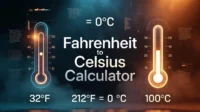
Convert Fahrenheit to Celsius with precision using: °C = (°F - 32) × 5/9
✓ Accurate to 4 decimal places
Get instant conversions to Celsius (°C) and Kelvin (K) simultaneously
✓ Perfect for scientific calculations
10 popular temperatures ready to convert instantly - from freezing point to oven temperature
✓ One-click conversion shortcuts
Learn with step-by-step calculations, real-world examples, and temperature comparisons
✓ Perfect for students & professionals
🌍 Travel & Weather: Understand temperatures when traveling abroad
👨🍳 Cooking & Baking: Convert recipe temperatures accurately
🔬 Science & Research: Scientific calculations and experiments
🏥 Health & Medical: Body temperature monitoring
🏠 HVAC & Climate: Home temperature control systems
📖 Education: Learning temperature scales and conversions
⚠️ Physical Limit: Absolute zero is -459.67°F (-273.15°C). No temperature can go below this point.
📊 Temperature Input
📈 Conversion Results
🔢 Calculation Steps
📋 Temperature Context
📚 Educational Information
🔬 Understanding the Formula: °C = (°F - 32) × 5/9
Why subtract 32? The Fahrenheit scale sets water's freezing point at 32°F, while Celsius uses 0°C. Subtracting 32 aligns both scales at the freezing point.
Why multiply by 5/9? Between freezing and boiling, Fahrenheit spans 180 degrees (212°F - 32°F), while Celsius spans 100 degrees (100°C - 0°C). The ratio 100/180 = 5/9 converts the scale.
⚡ Quick Mental Math Trick: For rough estimates, subtract 30 and divide by 2. Example: 68°F ≈ (68-30)/2 = 19°C (actual: 20°C)
🔄 Reverse Formula (C to F): °F = (°C × 9/5) + 32. To convert back, multiply by 1.8 and add 32.
📏 Temperature Differences: A change of 1°F = 0.556°C. A change of 1°C = 1.8°F.
🌡️ Real-World Examples:
• Freezing: 32°F (0°C) - Water freezes, ice forms
• Cold Day: 41°F (5°C) - Need a jacket
• Room Temperature: 68°F (20°C) - Comfortable indoors
• Body Temperature: 98.6°F (37°C) - Healthy human
• Boiling: 212°F (100°C) - Water boils at sea level
• Oven Temperature: 350°F (176.7°C) - Baking standard
📊 Interesting Facts:
• At -40°, Fahrenheit and Celsius are equal: -40°F = -40°C
• Kelvin starts at absolute zero (-273.15°C / -459.67°F)
• Kelvin doesn't use degree symbol, just K
📊 Temperature Reference Points
| Description | Fahrenheit | Celsius | Kelvin |
|---|---|---|---|
| Absolute Zero | -459.67°F | -273.15°C | 0 K |
| Coldest Winter Ever | -128.6°F | -89.2°C | 184 K |
| Water Freezes | 32°F | 0°C | 273.15 K |
| Cold Winter Day | 0°F | -17.8°C | 255.4 K |
| Room Temperature | 68-72°F | 20-22°C | 293-295 K |
| Human Body Temperature | 98.6°F | 37°C | 310.15 K |
| Fever Threshold | 100.4°F | 38°C | 311.15 K |
| Water Boils (Sea Level) | 212°F | 100°C | 373.15 K |
| Hottest Day Ever Recorded | 134°F | 56.7°C | 329.85 K |
| Oven (Baking) | 350°F | 176.7°C | 449.85 K |
| Pizza Oven | 450-500°F | 232-260°C | 505-533 K |
| Perfect Swimming Pool | 78-82°F | 25.5-27.8°C | 298.5-301 K |
Temperature is a part of our daily lives, from checking the weather in the morning to adjusting the thermostat at home, or even following recipes in the kitchen. Yet, many of us encounter a challenge when the temperature is reported in a unit we are not familiar with. One of the most common conversions people need is Fahrenheit to Celsius. Whether you’re traveling abroad, reading a science textbook, or watching a weather report, understanding this conversion can make life much easier and prevent mistakes.
The Fahrenheit and Celsius scales are two of the most widely used systems for measuring temperature. While Celsius is standard in most countries, Fahrenheit is still commonly used in the United States and a few other regions. This means that knowing how to convert between these two units is essential for students, professionals, travelers, and even casual readers who want to understand temperature accurately.
In this guide, we will explore everything you need to know about Fahrenheit to Celsius conversions. From the history of both temperature scales to practical methods for converting numbers in everyday situations, this article will provide clear explanations, step-by-step formulas, tips, and even fun facts. We’ll also look at modern technology tools like apps and smart devices that can simplify the process, and highlight common mistakes to avoid.
By the end of this article, you’ll not only know how to convert Fahrenheit to Celsius with confidence but also understand why these conversions matter in science, cooking, travel, and daily life. Whether you’re preparing a recipe that lists oven temperatures in Fahrenheit or checking a weather app while traveling abroad, this guide will equip you with all the knowledge you need to handle temperature conversions like a pro.
How to Convert Fahrenheit to Celsius
Converting Fahrenheit to Celsius is one of the most common temperature conversions in daily life. Whether you are checking the weather, following a recipe, working on a science project, or traveling internationally, understanding this conversion helps you interpret temperature data accurately and confidently.
Unlike Fahrenheit, which is mainly used in the United States, Celsius is the global standard for weather reports, scientific research, and most countries worldwide. Learning how to convert between these two systems is a practical skill that saves time and prevents misunderstandings.
The Formula Explained
The standard temperature formula used worldwide to convert Fahrenheit to Celsius is:
(°F − 32) × 5/9 = °C
This formula adjusts for the different starting points and scales of the two temperature systems. Fahrenheit sets the freezing point of water at 32°F, while Celsius sets it at 0°C. The multiplication by 5/9 accounts for the difference in scale between the two units.
Step-by-Step Calculation Example
Let’s convert 77°F to Celsius:
- Start with the Fahrenheit value: 77°F
- Subtract 32: 77 − 32 = 45
- Multiply by 5/9: 45 × 5/9 = 25
Result: 77°F = 25°C
This step-by-step method ensures accuracy and helps avoid common Fahrenheit conversion mistakes, especially when dealing with precise temperature data.
Using Online Tools and Calculators
If you prefer speed and convenience, using an online conversion tool is an excellent option. Today’s Fahrenheit to Celsius calculator tools are highly accurate, mobile-friendly, and available for free.
Most reliable online calculators allow you to:
- Instantly convert Fahrenheit to Celsius
- Handle negative temperatures and decimals
- Convert multiple values at once
These digital tools are especially useful for professionals, students, travelers, and anyone who regularly works with temperature data.
Advantages of Using Digital Tools
Using an online conversion tool offers several clear benefits:
- Time-saving: Results appear instantly without manual calculation
- Accuracy: Reduces human error in temperature conversion
- Accessibility: Available on smartphones, tablets, and desktops
- Multi-unit support: Many tools also convert to Kelvin or Rankine
For quick checks or repeated conversions, a Fahrenheit to Celsius calculator is often the most practical solution.
Quick Estimation Techniques
Sometimes, you don’t need an exact number. In everyday situations, a fast mental estimate is more than enough.
A simple estimation method:
- Subtract 30 from the Fahrenheit value
- Divide the result by 2
For example:
- 86°F → (86 − 30) ÷ 2 = 28°C (actual value: ~30°C)
While not perfectly precise, this quick Fahrenheit conversion technique gives a close estimate that works well for weather checks or casual conversations.
Practical Situations for Quick Conversions
Quick estimation is useful when:
- Checking weather forecasts while traveling
- Comparing temperatures in conversations
- Making fast decisions about clothing or activities
Common Mistakes in Fahrenheit to Celsius Conversion
Even though the formula is straightforward, errors still happen. Understanding common conversion errors can help you avoid incorrect results and misinterpretations.
Misreading Numbers
One of the most frequent temperature mistakes is confusing Fahrenheit and Celsius values. This often occurs in:
- International weather reports
- Online recipes
- Medical or fitness-related temperature data
For example, 100°F is a normal fever-range body temperature, but 100°C is the boiling point of water. Misreading these units can lead to serious misunderstandings.
Being mindful of the unit symbol (°F vs °C) is essential when interpreting any temperature value.
Rounding Errors
Rounding may seem harmless, but it can significantly affect results in certain contexts.
In scientific research, engineering, or laboratory work, even a small rounding error can impact outcomes. In cooking or baking, rounding Celsius values too aggressively may alter texture or doneness.
To avoid issues:
- Keep at least one decimal place when precision matters
- Round only at the final step of calculation
Using precise conversion methods helps maintain accuracy and consistency, especially when exact temperatures are required.
Using Wrong Formulas
Another common error is applying the wrong temperature formula. Each temperature scale has its own conversion rules:
- Fahrenheit to Celsius: (°F − 32) × 5/9
- Celsius to Fahrenheit: (°C × 9/5) + 32
- Celsius to Kelvin: °C + 273.15
Mixing these formulas can produce incorrect results and confusion. Always confirm which temperature units you are converting before starting the calculation.
Understanding the differences between Kelvin, Celsius, and Fahrenheit ensures accurate conversions across scientific, academic, and everyday applications.
Common Mistakes in Fahrenheit to Celsius Conversion
Understanding temperature conversion seems simple, but in real life many people still make avoidable mistakes. These errors can affect daily activities like cooking, traveling, or even scientific work. Below are the most common issues and how to avoid them.
Misreading Numbers
One of the most frequent temperature mistakes happens when people misread or confuse Fahrenheit (°F) and Celsius (°C). This is especially common in recipes, weather apps, and online articles that don’t clearly label the unit.
Confusing °F and °C in Recipes or Weather Reports
For example, a weather report showing 86° can mean very different things:
- 86°F = warm summer weather
- 86°C = extreme heat, not realistic for daily weather
The same issue appears in cooking. Setting an oven to 350°C instead of 350°F can completely ruin a dish and even damage kitchen equipment.
How to avoid this conversion error:
- Always check the symbol (°F or °C)
- Use reliable weather conversion tools
- Double-check units before adjusting oven temperatures
Rounding Errors
Rounding looks harmless, but it can significantly affect results in certain situations. The standard conversion formula often produces decimal values, and careless rounding can lead to inaccurate outcomes.
How Rounding Can Affect Results in Scientific or Cooking Contexts
In cooking, rounding 176.7°C to 180°C may slightly overcook baked goods. In science, even a small rounding Celsius error can impact experiment results, especially in chemistry or physics labs.
Best Practices for Precise Conversion
- Keep one decimal place when accuracy matters
- Round only at the final step, not during calculations
- Use digital tools for precise conversion
Using Wrong Formulas
Another common problem is using the wrong temperature formula altogether. Many people mix up formulas for Celsius, Fahrenheit, and Kelvin.
Differences Between Conversion to Kelvin, Celsius, and Fahrenheit
Each temperature scale serves a different purpose:
- Fahrenheit to Celsius: (°F − 32) × 5/9
- Celsius to Kelvin: °C + 273.15
- Fahrenheit to Kelvin: (°F − 32) × 5/9 + 273.15
Using the Kelvin formula when you need Celsius leads to serious conversion errors, especially in academic or technical settings.
Tip for Avoiding Formula Confusion
- Memorize the basic Fahrenheit to Celsius formula
- Label formulas clearly in notes
- Use conversion charts for quick reference
Practical Applications of Fahrenheit to Celsius
Temperature conversion is not just theory. It plays an important role in many real-world situations, from daily weather checks to professional environments.
Weather Forecasting
Weather data is often reported in different units depending on the country. This creates confusion for international travelers and online readers.
Converting Temperature Reports for International Travelers
Most countries use Celsius, while the United States still relies on Fahrenheit. Travelers checking Fahrenheit weather reports may underestimate or overestimate how hot or cold it actually feels.
Simple Travel Tip
- Convert key temperatures in advance (freezing, room temperature, heatwave levels)
- Save a weather conversion app on your phone
Cooking and Baking
Cooking is one of the most practical areas where accurate temperature conversion matters.
Recipes in Fahrenheit vs Celsius
Many international recipes list oven settings in Fahrenheit, while ovens in Europe and Asia use Celsius by default. Incorrect conversion can lead to dry cakes or undercooked meals.
Tips for Converting Oven Temperatures Accurately
- Use oven temperature conversion charts
- Avoid rough estimates when baking
- Remember common benchmarks (e.g., 180°C ≈ 350°F)
Pro Tip for Home Bakers
For baking, precision matters more than speed. Always double-check your cooking conversion before preheating the oven.
Science and Education
Accurate temperature in science is critical. Errors can affect lab safety, data accuracy, and learning outcomes.
Laboratory Experiments Requiring Accurate Conversions
In experiments involving chemical reactions or physical measurements, even a small conversion error can change the result.
Classroom Teaching Tips
Teachers should:
- Explain why different scales exist
- Show step-by-step educational conversion examples
- Encourage students to practice manual and digital conversions
Learning Advantage
Understanding conversion logic helps students think critically rather than memorizing numbers.
Travel and International Context
Temperature units vary widely across the world, making global temperature understanding an essential skill.
Using Celsius vs Fahrenheit Around the World
- Celsius: Used in most countries globally
- Fahrenheit: Mainly used in the United States
Travelers often misjudge clothing needs or activity plans due to misunderstanding temperature units.
Smart Travel Tips
- Learn common temperature ranges in Celsius
- Convert daily forecasts before planning activities
- Keep conversion shortcuts handy
Fahrenheit to Celsius in Modern Technology
Temperature conversion might sound like a basic math task, but in today’s digital world it happens constantly, silently, and at massive scale. From smart homes to global IoT networks, converting Fahrenheit to Celsius is a core process that keeps systems accurate, consistent, and user-friendly across regions.
Smart Thermostats
Smart thermostats are one of the most common examples of automatic temperature conversion in action. These devices are designed for global markets, where users may prefer different measurement systems.
How Devices Automatically Convert Temperatures
Behind the scenes, smart thermostats rely on internal algorithms that instantly convert Fahrenheit to Celsius (and vice versa) using standardized formulas. The user never sees the calculation—only the result that matches their regional preference.
Most modern thermostats:
- Store temperature data in a single internal unit to avoid errors
- Convert values dynamically based on user settings
- Sync converted data across mobile apps and cloud dashboards
This approach ensures consistency whether you’re checking your home temperature on a wall display, smartphone, or web portal.
Smart Home Temperature Accuracy
Accurate conversion is critical for energy efficiency. A small rounding error can affect heating or cooling schedules, leading to higher energy use. That’s why leading brands test thermostat conversion systems extensively before release.
Apps and Mobile Tools
Mobile technology has made Fahrenheit to Celsius conversion faster and more accessible than ever. Today, you don’t need to remember formulas at all.
Popular Mobile Apps for Instant Conversion
Temperature conversion apps are among the most downloaded utility tools worldwide. They are widely used by:
- Travelers moving between countries
- Students studying science or engineering
- Professionals working with international data
Most apps offer instant results as you type, often with offline support. Some advanced tools even integrate weather forecasts, showing temperatures in both Fahrenheit and Celsius side by side.
Conversion Tools Beyond Simple Numbers
Modern conversion tools go beyond basic calculations. Many now include:
- Voice input (“Convert 86 Fahrenheit to Celsius”)
- Widget support on home screens
- Integration with weather and fitness apps
This evolution reflects how temperature apps and digital conversion tools have become part of daily life, not just emergency utilities.
Integration with IoT Devices
The Internet of Things (IoT) relies heavily on accurate temperature data. From agriculture to healthcare, conversion errors are not an option.
How IoT Devices Handle Fahrenheit and Celsius
Most IoT systems standardize temperature data at the sensor level. Sensors may record in Celsius for scientific accuracy, then convert to Fahrenheit for users in specific regions.
Key industries using this approach include:
- Smart agriculture (soil and greenhouse monitoring)
- Cold-chain logistics
- Wearable health devices
Cloud platforms play a major role, ensuring that every connected smart device displays temperature values correctly based on user location or preference.
Global IoT Temperature Monitoring
As IoT networks expand globally, IoT temperature monitoring depends on seamless conversion to avoid confusion. A logistics manager in the U.S. and a supplier in Europe must see consistent data, even if they use different units.
This is why smart devices today are designed with multi-unit support from day one.
Fun Facts and Trivia About Temperature Conversion
Beyond technology, Fahrenheit and Celsius have fascinating stories rooted in history, culture, and extreme natural events.
Extreme Temperatures Around the World
Earth has experienced some truly mind-blowing temperatures, and understanding them often requires switching between Fahrenheit and Celsius.
Highest and Lowest Recorded Temperatures
- The highest recorded temperature on Earth reached about 134°F (56.7°C) in a desert environment
- The coldest natural temperature ever measured dropped below -128°F (-89.2°C) in Antarctica
These extremes help scientists study climate patterns, material limits, and human survival. In discussions of extreme weather and temperature records, conversion is essential for global understanding.
Cultural Preferences
Why does one country use Fahrenheit while most of the world uses Celsius? The answer lies in history and habit.
Temperature Culture and Daily Life
Countries that use Fahrenheit often value its finer scale for daily weather reporting. A change of one degree Fahrenheit feels more gradual, which some people find intuitive.
On the other hand, Celsius aligns closely with scientific standards:
- 0°C for freezing water
- 100°C for boiling water
This simplicity explains why Celsius dominates science, education, and international communication. These differences shape global temperature culture and reflect broader measurement systems traditions.
Interesting Historical Conversions
Long before apps and smart devices, people still needed to convert temperatures—often the hard way.
How Early Explorers and Scientists Handled Conversions
Early explorers carried thermometers calibrated in different scales. When sharing data, they relied on handwritten tables or manual calculations. Mistakes were common, especially during long expeditions.
Some scientists even created personal reference charts to translate readings quickly. These early efforts laid the groundwork for standardized formulas still used today.
Fahrenheit Stories from the Past
Daniel Gabriel Fahrenheit originally designed his scale using reference points based on salt solutions and human body temperature. Over time, conversions between scales became necessary as Celsius gained popularity in scientific circles.
These historical temperature practices and classic Fahrenheit stories remind us that modern convenience is built on centuries of experimentation and adaptation.
Tips for Remembering Fahrenheit to Celsius Conversion
Understanding how to convert Fahrenheit to Celsius is a practical skill, especially in a world where both systems are still widely used. Whether you’re checking international weather forecasts, following a recipe, or traveling abroad, having quick conversion tips can save time and reduce confusion. Below are easy, realistic ways to remember and apply the conversion without constantly relying on calculators.
Mnemonics and Memory Tricks
One of the most effective conversion tips is using simple memory hacks instead of memorizing complex formulas.
A popular mental shortcut is the “minus 30, divide by 2” rule. While not mathematically perfect, it’s accurate enough for everyday use:
- Subtract 30 from the Fahrenheit value
- Divide the result by 2
For example, 86°F → (86 − 30) ÷ 2 = 28°C (actual value is ~30°C, close enough for daily use).
Another memory hack is anchoring familiar reference points:
- 32°F = 0°C (freezing point of water)
- 68°F = 20°C (comfortable room temperature)
- 77°F = 25°C (warm but pleasant)
- 100°F = 38°C (body fever range)
By remembering just a few fixed points, your brain can estimate most temperatures quickly without stress.
Everyday Practice
The fastest way to master any skill is repetition, and temperature conversion is no exception. Practical conversion becomes second nature when you apply it to real life.
Try converting:
- Daily weather forecasts from international apps
- Oven or air fryer settings when following US-based recipes
- Hotel room thermostats during travel
If you live in a Celsius-based country but often read Fahrenheit-based content, make it a habit to mentally convert at least one temperature per day. This consistent exposure reinforces learning and improves your confidence with daily Fahrenheit use.
A useful trick is comparing how a temperature “feels” instead of focusing only on numbers. Over time, you’ll instinctively know that 50°F feels cool, while 90°F feels uncomfortably hot.
Using Visual Aids
Visual tools are excellent for long-term memory, especially for visual learners. A well-designed temperature chart can instantly clarify differences between Fahrenheit and Celsius.
Consider using:
- A printed Fahrenheit Celsius table near your workspace or kitchen
- Smartphone lock-screen widgets showing both units
- Simple comparison graphs highlighting cold, warm, and hot ranges
Seeing temperatures side by side trains your brain to recognize patterns instead of memorizing formulas. Over time, the relationship between the two scales becomes intuitive rather than mechanical.
Future of Temperature Measurements
As globalization accelerates, temperature measurement systems are also evolving. The discussion around standardization is becoming more relevant than ever.
Global Trends in Temperature Usage
Currently, most countries rely on Celsius as part of the metric system, while Fahrenheit remains common in a few regions. However, international collaboration in science, trade, and education is slowly encouraging metric system adoption worldwide.
With global digital platforms, international news, and climate reporting, there is growing pressure toward temperature standardization. While a complete shift may take decades, younger generations are already becoming more comfortable switching between systems.
Impact on Science, Technology, and Travel
Consistent temperature units play a critical role in global communication. In science and engineering, standardized units reduce errors, improve data sharing, and increase scientific accuracy.
For travelers, unified measurements mean:
- Easier understanding of weather conditions
- Safer interpretation of health and safety guidelines
- Smoother communication across borders
In technology, smart devices and AI-powered systems increasingly display both units by default, bridging the gap between Fahrenheit and Celsius users.
Conclusion
Mastering Fahrenheit to Celsius conversion is more than a math exercise—it’s a life skill. From simple memory hacks and everyday practice to visual tools and global trends, learning temperature conversion improves clarity and confidence.
By practicing regularly and using real-world references, temperature learning becomes effortless. Whether you’re a student, traveler, or professional, this Fahrenheit to Celsius guide can help you navigate temperatures accurately and comfortably.
The key is consistency: keep converting, keep comparing, and soon it will feel completely natural.