Distance is one of the most important concepts in mathematics because it helps us understand the space between two locations, objects, or points. From simple daily activities such as measuring the distance between two places to advanced applications like GPS navigation, engineering design, computer graphics, and artificial intelligence, distance measurement plays a major role in modern life.
In mathematics, calculating distance becomes more interesting when points are represented using coordinates. A coordinate system allows us to describe exact positions on a flat surface or in a three-dimensional space. By using values such as the x-coordinate and y-coordinate, we can determine how far one point is from another with a reliable mathematical method.
For students and professionals, calculating the distance between two points manually can sometimes become time-consuming, especially when dealing with complex numbers or multiple calculations. This is where a distance formula calculator becomes a useful solution. It provides a quick and accurate way to find the distance between coordinates while helping users understand the relationship between geometry and algebra.
The concept behind distance calculation comes from one of the most famous principles in mathematics: the Pythagorean theorem. This theorem explains the relationship between the sides of a right triangle and forms the foundation of the distance formula used in coordinate geometry. By applying this idea, a straight-line distance between two points can be calculated efficiently.
A distance formula calculator is not only useful for solving classroom exercises but also supports many professional fields. Engineers use distance calculations when designing structures, architects apply coordinate measurements in planning projects, developers use distance algorithms in software and games, and scientists rely on mathematical models to analyse spatial relationships.
Understanding how distance calculations work is valuable because it develops problem-solving skills and improves mathematical confidence. Instead of viewing formulas as complicated equations, learners can see them as practical tools that explain real-world situations.
With the growth of online learning platforms and digital mathematics tools, accessing accurate calculations has become easier than ever. However, knowing the basic concept behind the calculation remains important because it allows users to interpret results correctly and apply them in different situations.
This complete guide will explore the principles behind distance calculations, explain the formula step by step, discuss how online calculation tools work, provide practical examples, and show how this mathematical concept is applied across education, technology, engineering, and everyday problem-solving.
Whether you are a student learning coordinate geometry, a teacher preparing lessons, or a professional who needs fast mathematical solutions, understanding the distance formula and its applications can make calculations simpler, faster, and more meaningful.
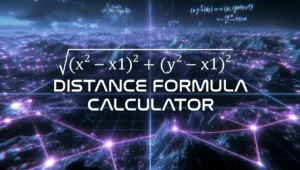
What Is a Distance Formula Calculator?
A Distance Formula Calculator is a mathematical tool that quickly calculates the straight-line distance between two points on a coordinate plane. Instead of solving equations manually, users simply enter the coordinates of two points, and the calculator instantly returns the correct result.
Whether you’re a student learning coordinate geometry, an engineer working with design layouts, a programmer developing navigation systems, or simply someone solving math problems, this tool saves time while reducing calculation errors.
Modern online distance calculators are widely available and can solve problems in seconds. Many also provide step-by-step solutions, making them useful for both learning and professional applications.
Definition of Distance Formula Calculator
A Distance Formula Calculator is an online or software-based tool designed to calculate the shortest distance between two coordinates using the standard distance formula from coordinate geometry.
Instead of manually squaring numbers, adding values, and calculating square roots, the calculator automates every step.
For example, if you have two points:
- Point A (2, 5)
- Point B (8, 13)
The calculator immediately computes the straight-line distance without requiring any manual calculations.
This makes the tool especially useful in fields such as:
- Mathematics education
- Engineering
- Computer graphics
- GIS (Geographic Information Systems)
- Robotics
- Game development
- Physics
- Architecture
Why People Use a Distance Formula Calculator
Manual calculations are perfectly possible, but they become time-consuming when working with multiple coordinate pairs.
A calculator offers several advantages:
- Instant results
- Higher accuracy
- Reduced human error
- Step-by-step explanations (on many platforms)
- Easy use for beginners
- Support for decimals and negative coordinates
Students often use the calculator to verify homework, while professionals rely on it for efficient project calculations.
Manual Calculation vs Distance Formula Calculator
| Manual Calculation | Distance Formula Calculator |
|---|---|
| Requires writing the formula | Formula applied automatically |
| Time-consuming | Instant calculation |
| Easy to make arithmetic mistakes | Highly accurate |
| Good for learning concepts | Excellent for quick verification |
| Best for practice | Best for productivity |
How a Distance Calculator Works Behind the Scenes
Although the interface looks simple, several mathematical operations occur in the background.
The calculator follows a sequence of calculations based entirely on coordinate geometry.
Step 1: Input Two Coordinate Points
The user enters:
- First coordinate (x₁, y₁)
- Second coordinate (x₂, y₂)
Example:
- (3, 7)
- (12, 15)
These values become the inputs for the formula.
Step 2: Calculate Coordinate Differences
The calculator determines the horizontal and vertical differences.
Horizontal difference:
x₂ − x₁
Vertical difference:
y₂ − y₁
These differences represent movement along the coordinate plane.
Step 3: Apply the Mathematical Formula
Next, each difference is squared.
Squaring removes negative signs while emphasizing magnitude.
The calculator then adds both squared values together.
Step 4: Produce the Final Distance
Finally, the square root of the total is calculated.
The resulting number is the straight-line distance between both points.
This entire point distance calculation usually takes less than one second.
The Mathematics Behind Distance Formula
The Distance Formula comes directly from Euclidean geometry and is one of the most important equations in coordinate mathematics.
It measures the shortest possible path between two points.
Unlike road distance or walking distance, this calculation measures the direct line connecting two coordinates.
Understanding the Distance Between Two Points Formula
The standard formula is:
Distance = √[(x₂ − x₁)² + (y₂ − y₁)²]
Where:
- x₁ = first point x-coordinate
- y₁ = first point y-coordinate
- x₂ = second point x-coordinate
- y₂ = second point y-coordinate
Each variable contributes to determining how far apart two points are horizontally and vertically.
This distance between two points formula is one of the fundamental equations in coordinate geometry.
Because it is based on Euclidean space, the formula works for nearly every two-dimensional coordinate system.
Breaking Down the Formula Components
Understanding each component makes the formula much easier to remember.
X-Axis Difference
The x-axis measures horizontal movement.
The expression:
x₂ − x₁
shows how far apart the two points are from left to right.
For example:
Point A: x = 4
Point B: x = 11
Horizontal difference:
11 − 4 = 7
This value represents the horizontal distance before squaring.
Y-Axis Difference
The y-axis measures vertical movement.
The expression:
y₂ − y₁
shows how far one point is above or below another.
Example:
Point A: y = 5
Point B: y = 13
Vertical difference:
13 − 5 = 8
This becomes the vertical distance used in the equation.
Square Root Application
Why is the square root necessary?
Without it, the result would represent the square of the actual distance rather than the distance itself.
The square root converts the squared value back into its original measurement.
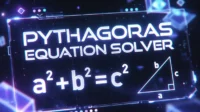
This step comes directly from the Pythagorean theorem, where the hypotenuse of a right triangle is calculated using:
a² + b² = c²
The square root extracts the true side length.
Connection Between Distance Formula and Pythagorean Theorem
The Distance Formula did not appear randomly.
It is a direct extension of one of mathematics’ oldest principles—the Pythagorean theorem.
Every distance calculation on a coordinate plane can be visualized as a right triangle.
How Geometry Creates the Distance Formula
Imagine plotting two points on graph paper.
Draw:
- A horizontal line
- A vertical line
Together they create a right triangle.
The horizontal side equals:
x₂ − x₁
The vertical side equals:
y₂ − y₁
The direct line connecting both points becomes the hypotenuse.
Applying the Pythagorean theorem gives:
Distance² = Horizontal² + Vertical²
Taking the square root produces the familiar distance formula.
This relationship makes the formula one of the clearest examples of geometry in practical mathematics.
Visual Understanding of Distance Between Coordinates
Picture a Cartesian plane.
Two dots appear on the graph.
Although many different routes could connect them, only one path represents the shortest possible distance:
A straight line.
This is called the Euclidean distance.
Unlike travel routes that follow roads or pathways, Euclidean distance ignores obstacles and measures only the direct connection.
This concept is widely used in:
- Computer vision
- Machine learning
- GPS preprocessing
- Physics simulations
- Artificial intelligence
- Data science
- Engineering
How to Use a Distance Formula Calculator Step by Step
Most calculators follow a simple workflow that anyone can complete within a minute.
Entering Coordinate Values Correctly
Begin by entering the coordinates for the first point.
Example:
- x₁ = 2
- y₁ = 7
Then enter the second point.
Example:
- x₂ = 9
- y₂ = 15
Double-check each coordinate before calculating.
Common input mistakes include:
- Swapping x and y values
- Missing negative signs
- Typing decimals incorrectly
- Entering coordinates in the wrong order
- Using commas instead of separate input fields
Fortunately, since the formula squares each difference, reversing the point order usually produces the same final distance.
Reading and Understanding the Result
After calculation, the output represents the straight-line distance between both points.
For example:
Distance = 10.63
This means the two coordinates are approximately 10.63 units apart.
The unit depends entirely on your coordinate system.
Possible units include:
- meters
- kilometers
- miles
- feet
- centimeters
- inches
- pixels
- map units
Always ensure your coordinate values use the same measurement system.
Distance Formula Examples With Real Calculations
Examples make the formula much easier to understand.
Simple Two-Dimensional Distance Example
Suppose two points are:
A (2, 3)
B (8, 11)
Step 1:
Horizontal difference
8 − 2 = 6
Step 2:
Vertical difference
11 − 3 = 8
Step 3:
Square both values
6² = 36
8² = 64
Step 4:
Add them together
36 + 64 = 100
Step 5:
Square root
√100 = 10
The distance between both points is 10 units.
This is a classic coordinate geometry example demonstrating the distance formula in two dimensions.
Distance Calculation Using Negative Coordinates
Negative coordinates often confuse beginners, but the formula handles them naturally.
Example:
A (-4, 2)
B (5, -6)
Horizontal difference:
5 − (-4) = 9
Vertical difference:
-6 − 2 = -8
Square each value:
9² = 81
(-8)² = 64
Add:
81 + 64 = 145
Square root:
√145 ≈ 12.04
Even though one difference is negative, squaring removes the negative sign, producing the correct distance.
This demonstrates why the formula works consistently across the entire coordinate system, regardless of positive or negative values.
Real-Life Application Example
The Distance Formula extends far beyond classroom exercises.
Mapping and Navigation
Digital maps estimate straight-line distances between locations before determining road routes.
This helps logistics companies, surveyors, and GIS analysts evaluate geographic relationships efficiently.
Robotics
Autonomous robots calculate distances between their current position and target locations to plan movement paths, avoid obstacles, and optimize navigation.
Game Development
Video games constantly measure distances between players, enemies, projectiles, and interactive objects.
Examples include:
- Enemy detection ranges
- Character movement
- Collision detection
- Projectile trajectories
- AI pathfinding
Without fast real-world distance calculation, modern games would struggle to deliver smooth and responsive gameplay.
Benefits of Using a Distance Formula Calculator
A reliable calculator offers advantages beyond convenience.
Saves Time
Complex calculations involving decimals or multiple coordinate pairs can be completed instantly.
Improves Accuracy
Automated calculations reduce arithmetic mistakes, especially when working with large datasets or engineering projects.
Supports Learning
Many calculators display each calculation step, helping students understand the underlying mathematics instead of simply receiving an answer.
Works Across Many Fields
Distance calculations are essential in:
- Mathematics
- Architecture
- Civil engineering
- Surveying
- Geographic Information Systems (GIS)
- Computer graphics
- Robotics
- Physics
- Artificial intelligence
- Data analysis
Common Mistakes to Avoid
Even with a calculator, incorrect input can produce inaccurate results.
Some common mistakes include:
- Entering x and y values in the wrong fields
- Forgetting negative signs
- Mixing different measurement units
- Using incorrect coordinate pairs
- Rounding numbers too early during manual calculations
Carefully reviewing your inputs before calculating helps ensure accurate results every time.
Applications of Distance Formula Calculator in Different Fields
A Distance Formula Calculator is not only a simple mathematics tool for finding the space between two points. Today, it is widely used in education, engineering, software development, mapping systems, and many technology-based industries.
The ability to calculate distance accurately is important because many real-world systems depend on location, measurement, and spatial relationships. From helping students understand geometry to supporting artificial intelligence models, the distance formula has become a fundamental concept across many disciplines.
The calculator simplifies complex calculations by automatically applying mathematical formulas, reducing human errors and saving time.
Education and Learning Mathematics
One of the most common uses of a Distance Formula Calculator is in schools and online learning platforms. It helps students understand how coordinates, geometry, and mathematical relationships work.
Supporting Geometry Learning
Geometry is a major part of mathematics that focuses on shapes, angles, measurements, and positions. The distance formula helps students calculate the length between two points on a coordinate plane.
For example, when learning about lines, triangles, or geometric shapes, students can use a distance calculator to check their calculations and better understand how coordinates affect distance.
This supports:
- Better understanding of coordinate geometry
- Visual learning through graphs
- Faster problem-solving skills
- Improved mathematical confidence
A distance calculator is especially useful in math education because students can focus on understanding the concept instead of spending too much time on repetitive calculations.
Faster Mathematics Practice
Traditional distance calculations require several steps:
- Subtracting coordinate values
- Squaring the differences
- Adding the results
- Finding the square root
For beginners, mistakes can easily happen during these steps. An online calculator allows students to practice more examples quickly while comparing their manual answers.
This makes geometry learning more interactive and effective, especially in digital classrooms.
Digital Mathematics Learning
Modern education increasingly uses technology-based learning tools. Online calculators, interactive graphs, and educational applications help students explore mathematical concepts in a practical way.
A distance formula calculator can be integrated into:
- Online math courses
- Virtual classrooms
- Learning management systems
- Educational mobile applications
These tools support independent learning and allow students to experiment with different coordinate values.
Engineering and Architecture
Engineers and architects frequently work with measurements, designs, and spatial relationships. Accurate distance calculations are essential for creating safe and efficient structures.
Design Measurement and Planning
In architecture, distance calculations help professionals determine:
- Building dimensions
- Room layouts
- Structural positions
- Material requirements
Architects often use coordinate-based systems when designing buildings. The distance formula helps measure the relationship between different points in a digital model.
This improves design measurement accuracy and reduces mistakes before construction begins.
CAD Software Applications
Computer-Aided Design (CAD) software uses mathematical calculations to create detailed digital models.
Many CAD programs rely on distance calculations for:
- Measuring objects
- Creating accurate drawings
- Checking design dimensions
- Positioning components
Engineers working on mechanical parts, bridges, buildings, or industrial systems use these calculations regularly.
A reliable engineering calculation process helps ensure designs meet technical standards.
Construction Planning
Construction projects require precise measurements from the planning stage to completion. Distance calculations help determine:
- Site dimensions
- Equipment placement
- Structural alignment
- Distance between important points
Using digital distance calculation tools reduces measurement errors and improves project efficiency.
Computer Science and Programming
Distance calculations play an important role in computer science. Many software systems need to understand the relationship between objects, locations, or data points.
Distance Algorithms
In programming, the distance formula is often implemented as an algorithm. A computer can calculate the distance between two points quickly, making it useful for many applications.
Examples include:
- Object detection systems
- Search algorithms
- Navigation software
- Recommendation systems
The most common method is the Euclidean distance, which measures the shortest straight-line distance between two points.
A developer may use an Euclidean distance calculator concept when building applications that require spatial analysis.
Artificial Intelligence Applications
Artificial intelligence systems often analyze large amounts of data. Distance calculations help AI models compare similarities and differences between data points.
Examples include:
- Image recognition
- Pattern detection
- Machine learning classification
- Recommendation engines
In machine learning, data points that are closer together often represent similar characteristics.
Distance-based calculations help AI systems make better predictions and decisions.
Game Programming
Video games rely heavily on distance calculations to create realistic environments.
Developers use distance algorithms for:
- Character movement
- Enemy detection
- Collision systems
- Virtual world navigation
For example, a game character may need to know how far away another player is before triggering an action.
This shows how algorithm calculation directly affects user experience in modern software.
Geography and Mapping Technology
Distance calculations are essential in geographic systems. Modern maps and navigation services depend on accurate location measurements.
GPS Systems
Global Positioning System (GPS) technology calculates distances between locations using satellite data.
Applications include:
- Driving navigation
- Fitness tracking
- Delivery services
- Transportation management
Although real-world GPS calculations are more complex because Earth is curved, distance formulas are still fundamental for understanding location relationships.
Digital Maps
Online mapping platforms use distance calculations to estimate:
- Travel routes
- Location differences
- Nearby places
- Geographic relationships
Digital maps rely on advanced mathematical models to provide accurate information to users.
This technology supports industries such as logistics, tourism, and urban planning.
Location Calculation
Businesses use geographic distance calculations for many purposes, including:
- Finding nearest stores
- Optimizing delivery routes
- Planning transportation networks
The concept of geographic distance is important in modern mapping technology because location-based services continue growing worldwide.
Two-Dimensional vs Three-Dimensional Distance Calculation
Distance calculations can be performed in different dimensions depending on the situation. The most common types are two-dimensional (2D) and three-dimensional (3D) distance formulas.
Understanding 2D Distance Formula
A 2D distance formula calculates the distance between two points on a flat surface.
The formula uses two coordinates:
- X-axis position
- Y-axis position
The basic formula is:
Distance = √((x₂ − x₁)² + (y₂ − y₁)²)
Applications of 2D Distance
The 2D coordinate system is commonly used in:
- School mathematics
- Digital graphics
- Map layouts
- Basic design software
For example, when calculating the distance between two points on a graph, only horizontal and vertical positions are required.
This is known as plane distance because the calculation happens on a flat mathematical plane.
Understanding 3D Distance Formula
A 3D distance formula extends the traditional formula by adding another coordinate:
- X coordinate
- Y coordinate
- Z coordinate
The formula becomes:
Distance = √((x₂ − x₁)² + (y₂ − y₁)² + (z₂ − z₁)²)
Real-World Applications of 3D Distance
Three-dimensional calculations are used in many modern industries, including:
- 3D modeling
- Aerospace engineering
- Virtual reality
- Medical imaging
- Robotics
For example, engineers designing aircraft components need accurate measurements in three-dimensional space.
The three-dimensional distance formula is essential whenever objects exist in a real-world environment rather than a flat surface.
Distance Formula Calculator Compared With Other Distance Methods
Different distance calculation methods are suitable for different situations. Understanding their differences helps users choose the right approach.
Euclidean Distance vs Manhattan Distance
Euclidean distance and Manhattan distance are two common mathematical methods.
Euclidean Distance
Euclidean distance measures the shortest straight-line path between two points.
Example:
A person walking directly across an open field follows a Euclidean distance path.
Common uses:
- Geometry
- Physics
- Machine learning
- Computer graphics
Manhattan Distance
Manhattan distance calculates distance by adding horizontal and vertical movements.
Example:
A taxi driving through city streets follows a Manhattan distance approach because it cannot always travel in a straight line.
Formula:
Distance = |x₂ − x₁| + |y₂ − y₁|
Common uses:
- Urban navigation
- Grid-based games
- Computer algorithms
Choosing between an Euclidean distance calculator and Manhattan distance depends on the environment and purpose.
Distance Formula vs Measuring Tools
Traditional measuring tools and digital calculators both have advantages.
Manual Measurement
Examples:
- Rulers
- Measuring tapes
- Survey equipment
Advantages:
- Useful for physical objects
- Works without software
- Simple for small measurements
However, manual methods can introduce human errors.
Digital Calculation
A distance calculator provides:
- Faster results
- Higher consistency
- Automatic calculations
- Easy verification
For mathematical problems and digital environments, calculation tools usually provide better calculation accuracy compared with manual methods.
Common Mistakes When Calculating Distance Between Points
Even though the distance formula is simple, users often make mistakes during calculations.
Incorrect Coordinate Input
One of the most common errors is entering incorrect coordinates.
Problems include:
- Switching x and y values
- Forgetting negative signs
- Using the wrong point positions
For example, changing (-3, 5) into (3, 5) creates a completely different result.
Always check coordinate values carefully before calculating.
Forgetting Square Root Calculation
Another common mistake happens after adding squared values.
Some users stop at:
(x₂ − x₁)² + (y₂ − y₁)²
However, the final step requires finding the square root.
Without this step, the answer represents the squared distance, not the actual distance.
Using a calculator helps avoid this common mathematical error.
Confusing Distance With Direction
Distance and direction are different concepts.
Distance:
- Measures how far apart two points are
- Always has a positive value
Direction:
- Shows movement or position
- Can include positive and negative values
For example, moving five meters east and five meters west creates different directions but may result in the same total distance.
Understanding mathematical distance and direction calculation prevents confusion.
Benefits of Using an Online Distance Formula Calculator
Online distance calculators provide practical advantages for students, professionals, and researchers.
Faster Mathematical Solutions
A calculator instantly processes distance equations, eliminating the need for repeated manual calculations.
Benefits include:
- Saving time
- Reducing calculation steps
- Increasing productivity
This is especially useful when solving many coordinate problems.
Improving Learning Accuracy
A distance calculator can act as a learning assistant.
Students can:
- Compare manual answers
- Identify mistakes
- Understand formulas better
It supports learning by showing how mathematical concepts work in real situations.
Useful for Professionals and Students
Distance calculation tools are valuable across many fields:
- Students learning mathematics
- Engineers designing structures
- Developers creating software
- Researchers analyzing data
The wide application makes distance calculators practical for both academic and professional use.
Advanced Concepts Related to Distance Formula
The distance formula connects with many advanced mathematical and technological concepts.
Distance Formula in Coordinate Geometry
Coordinate geometry combines algebra and geometry by representing shapes using points and equations.
The distance formula helps calculate:
- Line lengths
- Triangle sides
- Shape dimensions
- Point relationships
It is a foundation of analytical geometry and coordinate mathematics.
Distance Between Lines and Objects
More advanced geometry involves finding distances between:
- Parallel lines
- Curved surfaces
- Objects in space
- Geometric structures
These calculations require more complex mathematical methods but are based on the same basic distance principles.
Applications include:
- Engineering simulations
- Physics research
- Computer graphics
Distance Algorithms in Modern Technology
Modern technology depends heavily on distance-based algorithms.
Applications include:
- Machine learning models
- Data science analysis
- Artificial intelligence systems
- Pattern recognition
In data science, distance helps measure similarity between datasets.
For example, recommendation systems may compare user behavior by calculating the closeness between data points.
Advanced data distance calculation methods continue improving as technology develops.
Understanding distance algorithms is also important in algorithm design, especially for developers building intelligent systems.
Frequently Asked Questions About Distance Formula Calculator
What Does a Distance Formula Calculator Do?
A Distance Formula Calculator is an online mathematical tool designed to calculate the exact distance between two points on a coordinate plane. It uses the distance formula from geometry to find the straight-line measurement between locations based on their coordinate values.
The calculator is commonly used in mathematics, geometry, physics, engineering, computer science, and data analysis because it removes the need for manual calculations and reduces the chance of calculation errors.
Main Function of a Distance Formula Calculator
The primary function of a distance calculator is to determine the shortest distance between two points. Users usually enter the coordinates of two points, such as:
- Point A: (x₁, y₁)
- Point B: (x₂, y₂)
The calculator then applies the formula:
Distance = √((x₂ – x₁)² + (y₂ – y₁)²)
The result represents the direct distance between the two points.
For example:
If Point A is (2, 3) and Point B is (8, 7), the calculator will measure the space between these coordinates and provide the final distance value.
Advantages of Using a Distance Formula Calculator
Using an online distance formula tool provides several benefits:
Faster Mathematical Calculations
Manual distance calculations require multiple steps, including subtraction, squaring numbers, addition, and finding square roots. A calculator completes these steps instantly.
Reduces Calculation Mistakes
Small errors in arithmetic can affect the final result. Digital calculators help improve accuracy by automatically processing the formula.
Useful for Learning Mathematics
A distance calculator is not only a solution tool but also a learning resource. Students can compare their manual calculations with the calculator output to understand how the formula works.
Helpful for Professional Applications
Many professionals use distance calculations in real-world situations, including:
- Architects measuring spatial layouts
- Engineers designing structures
- Developers creating mapping applications
- Scientists analyzing coordinate-based data
- Game developers creating virtual environments
A coordinate distance calculator makes complex calculations easier and more accessible.
Can Distance Formula Calculate 3D Distance?
Yes, the distance formula can calculate 3D distance by expanding the traditional 2D formula to include a third coordinate dimension.
The standard distance formula is mainly used for two-dimensional coordinate systems, where points have only:
- X-axis value
- Y-axis value
However, three-dimensional space includes an additional:
- Z-axis value
The 3D distance formula becomes:
Distance = √((x₂ – x₁)² + (y₂ – y₁)² + (z₂ – z₁)²)
This formula calculates the straight-line distance between two points in three-dimensional space.
Difference Between 2D and 3D Distance Calculation
The main difference is the number of dimensions involved.
2D Distance Formula
Used when working with flat surfaces, such as:
- Maps
- Graphs
- Floor plans
- Basic geometry problems
Example:
A point on a graph may be represented as:
(5, 4)
Only horizontal and vertical movement is considered.
3D Distance Formula
Used for objects or locations that exist in physical space.
Applications include:
- 3D modeling
- Architecture design
- Virtual reality environments
- Aerospace engineering
- Computer graphics
A 3D coordinate example:
(5, 4, 8)
The additional Z value represents depth or height.
Modern 3D distance calculators help professionals work with complex spatial measurements without manually solving advanced equations.
Is Distance Formula Based on Pythagorean Theorem?
Yes, the distance formula is directly based on the Pythagorean theorem, one of the most important principles in geometry.
The Pythagorean theorem states:
a² + b² = c²
where:
- a and b represent the lengths of the two shorter sides of a right triangle
- c represents the longest side, known as the hypotenuse
The distance formula uses this same concept.
Relationship Between Distance Formula and Pythagorean Theorem
When two points are placed on a coordinate plane, the horizontal difference and vertical difference create a right triangle.
For example:
- Horizontal distance = x₂ – x₁
- Vertical distance = y₂ – y₁
These values become the two sides of the triangle.
The direct distance between the points becomes the hypotenuse.
Therefore:
Distance² = Horizontal Difference² + Vertical Difference²
which leads to:
Distance = √((x₂ – x₁)² + (y₂ – y₁)²)
This connection explains why the distance formula works so reliably in geometry and other mathematical fields.
Understanding this relationship helps students learn that the formula is not just a memorized equation but a practical application of geometric principles.
Is Online Distance Calculation Accurate?
Yes, online distance calculation can be highly accurate when correct input values are provided.
A digital distance formula calculator follows mathematical rules precisely, meaning the calculation process itself is usually error-free.
However, accuracy depends on several important factors.
Factors Affecting Distance Calculation Accuracy
Correct Coordinate Input
The most common source of mistakes is incorrect user input.
Examples of input errors include:
- Switching x and y values
- Entering negative numbers incorrectly
- Using the wrong coordinate system
- Forgetting decimal values
A calculator can only provide accurate results based on the information entered.
Formula Implementation
Reliable calculators use the correct mathematical formula and apply proper rounding methods.
Advanced tools may also support:
- Decimal precision control
- Multiple coordinate formats
- 3D calculations
- Unit conversions
Measurement Accuracy
In real-world applications, the quality of the original measurements also matters.
For example, when calculating distance using GPS coordinates, accuracy depends on:
- GPS signal quality
- Satellite positioning
- Device technology
- Environmental conditions
A distance measurement calculator provides precise mathematical results, but real-world data must also be accurate.
Tips for Getting Accurate Distance Calculations
A distance formula calculator is simple to use, but following good practices ensures better results.
Double Check Coordinate Values
Before calculating distance, always verify the coordinates you entered.
Check:
- Are the x-values correct?
- Are the y-values correct?
- Are negative numbers placed correctly?
- Are the units consistent?
For example, mixing meters and kilometers can create incorrect results even if the formula is correct.
Taking a few seconds to review input data can prevent unnecessary mistakes.
Understand the Formula Concept
Although online calculators provide instant answers, understanding the distance formula remains important.
Knowing how the formula works helps users:
- Identify incorrect results
- Apply the method in different situations
- Understand mathematical relationships
- Solve problems without digital tools when necessary
A calculator should support learning, not replace mathematical understanding.
Students who understand the concept behind the formula can apply it more effectively in advanced topics such as:
- Coordinate geometry
- Vector mathematics
- Calculus
- Physics calculations
Choose the Right Distance Method
Not every distance problem uses the same calculation method.
Choose the correct approach based on your situation.
Coordinate Distance Formula
Best for:
- Geometry exercises
- Graph-based problems
- Mathematical analysis
3D Distance Formula
Best for:
- Engineering models
- Computer graphics
- 3D environments
Geographic Distance Calculation
Best for:
- GPS locations
- Travel distance
- Mapping applications
Geographic calculations often use methods such as the Haversine formula because Earth is curved rather than flat.
Selecting the correct distance method improves accuracy and relevance.
Future Development of Digital Mathematics Calculators
Digital mathematics tools continue to evolve as technology improves. Modern calculators are becoming more interactive, intelligent, and educational.
Future distance calculators may provide more than simple answers. They could include advanced explanations, visual demonstrations, and personalized learning support.
Artificial Intelligence in Mathematical Tools
Artificial intelligence is becoming an important part of modern mathematical software.
AI-powered calculators can provide:
AI Assisted Calculation
Future tools may automatically:
- Recognize mathematical problems from images
- Explain each calculation step
- Detect input mistakes
- Suggest the correct formula
Instead of only displaying the final answer, AI systems can explain why the answer is correct.
Smart Learning Systems
AI-based mathematics platforms can adapt to individual learning styles.
For example, they may:
- Identify student weaknesses
- Recommend practice problems
- Provide customized explanations
- Track learning progress
This creates a more personalized mathematics experience.
AI integration could make tools like the distance formula calculator more useful for both students and professionals.
Interactive Mathematics Education Platforms
The future of mathematics learning is moving toward more visual and interactive experiences.
Modern educational platforms may combine:
- Digital calculators
- 3D graphics
- Augmented reality (AR)
- Interactive simulations
- Real-time problem solving
Visual Learning Benefits
Visual demonstrations help users understand abstract mathematical concepts.
For distance formulas, interactive tools can show:
- Moving points on a graph
- Changing coordinate values
- Triangle formation
- Distance measurement in real time
This approach helps learners understand the relationship between numbers and physical space.
Future Education Technology
Advanced mathematics platforms may allow students to explore geometry through virtual environments.
Examples include:
- Creating 3D shapes
- Measuring virtual objects
- Exploring coordinate systems
- Solving real-world mathematical problems
These technologies can make mathematics more engaging and practical.
Conclusion: Why Distance Formula Calculator Is Useful for Modern Mathematics
A Distance Formula Calculator is a valuable tool that simplifies distance measurement between points while supporting learning and professional work.
Its main benefits include:
- Fast and accurate calculations
- Reduced mathematical errors
- Support for 2D and 3D distance problems
- Practical applications in many industries
- Better understanding of coordinate geometry
However, the true value of a distance calculator is not only getting the final answer. Understanding the mathematical concept behind the formula helps users apply their knowledge in different situations.
The connection between the distance formula and the Pythagorean theorem shows how basic geometry principles create powerful tools used in modern technology.
From classrooms to engineering projects, mapping systems, and digital design, distance calculators continue to play an important role in making mathematics more accessible, efficient, and practical. As artificial intelligence and interactive learning technology develop, these tools will become even smarter and more helpful for future generations.