🥄 Tbsp to Grams Converter
How Many Grams in a Tablespoon? — Convert tablespoons to grams for any ingredient instantly.
Why grams differ by ingredient: A tablespoon is a volume measurement (≈ 14.787 mL in the US), but grams measure mass. The conversion depends entirely on the ingredient's density. Water = 14.79 g/tbsp · Flour ≈ 7.83 g/tbsp · Honey ≈ 21 g/tbsp.
Tablespoon standards: US = 14.787 mL · Metric = 15 mL · UK/Imperial = 17.758 mL · Australian = 20 mL. Always check which standard your recipe uses.
⚠️ Note: Density values are approximate averages. Actual weight may vary based on packing, moisture content, brand, and temperature. For critical recipes, always use a kitchen scale.
⚙️ Converter Settings
🔁 Reverse Converter — Grams to Tablespoons
📊 Conversion Results
📐 Volume Equivalents
🧮 Step-by-Step Calculation
📋 Full Conversion Breakdown
⚖️ Common Ingredients — Grams per Tablespoon
| Ingredient | Density (g/mL) | 1 Tbsp | Your Amount | Category |
|---|
📚 Did You Know? — Tablespoon Conversion Facts
🍳 Pro Cooking Tips
🕐 Conversion History
In the world of cooking and baking, measurements play a crucial role in determining the success of a recipe. Whether you are preparing a simple homemade meal or experimenting with a complex dessert, accurate ingredient measurements can make the difference between a delicious result and a disappointing one. One of the most common measurement questions people ask is how many grams in a tablespoon and how to properly convert that measurement when following recipes from different countries.
Many recipes use tablespoons (tbsp) as a standard unit of measurement. This unit is widely used in home kitchens, cookbooks, and online recipes because it is convenient and easy to measure using simple kitchen tools. However, tablespoons measure volume, not weight. This means the number of grams contained in a tablespoon can vary depending on the ingredient being measured.
For example, one tablespoon of water weighs about 15 grams, while one tablespoon of flour weighs around 8 grams, and one tablespoon of sugar may weigh roughly 12–13 grams. The reason for this difference lies in something called ingredient density. Different substances occupy the same volume but have different weights. Because of this, converting tablespoons to grams is not always straightforward.
This is where a tbsp to grams converter becomes extremely useful. A converter helps cooks and bakers quickly translate tablespoon measurements into grams based on the specific ingredient being used. By doing so, it removes the guesswork from cooking and helps ensure recipes turn out exactly as intended.
The need for conversion tools has grown significantly in recent years because cooking has become more global than ever before. A recipe written in the United States might use tablespoons and cups, while a European recipe may rely primarily on grams and milliliters. When people try recipes from different regions, they often need a reliable way to convert between these measurement systems.
Another reason why people frequently search for how many grams in a tablespoon is the increasing popularity of baking and precision cooking. Baking, in particular, requires exact measurements. Even small variations in ingredient quantities can affect the texture, flavor, and structure of baked goods. Professional bakers often prefer weighing ingredients in grams rather than measuring by volume because weight measurements provide greater consistency and accuracy.
Using grams instead of tablespoons also helps eliminate issues caused by different measuring techniques. For instance, when measuring flour with a tablespoon, some people scoop directly from the container while others spoon it into the measuring tool. These different methods can lead to varying amounts of flour, which may impact the final outcome of the recipe. By converting the measurement using a tbsp to grams converter, cooks can achieve more precise results.
Another factor that complicates tablespoon measurements is that not all tablespoons are the same around the world. In the United States and the United Kingdom, a tablespoon typically equals 15 milliliters, while in Australia, a tablespoon is 20 milliliters. This difference may seem small, but it can significantly affect recipe measurements if the conversion is not done correctly.
Because of these variations, many home cooks, food bloggers, and professional chefs rely on conversion charts or digital tools that quickly show how many grams in a tablespoon for common ingredients such as flour, sugar, butter, oil, honey, salt, and cocoa powder. These charts simplify the cooking process and help ensure accuracy when preparing dishes.
Modern cooking tools have also made measurement conversions easier than ever. Digital kitchen scales allow users to measure ingredients directly in grams, while online converters and mobile apps can instantly convert tablespoons into grams for a wide range of ingredients. These tools are especially useful when scaling recipes up or down, preparing international dishes, or adapting recipes to personal preferences.
Understanding how tablespoon measurements work is not only helpful for cooking but also for nutrition and portion control. Many people track their food intake using weight measurements, which makes knowing the gram equivalent of a tablespoon very useful when calculating calories or macronutrients.
In addition, learning how to convert tablespoons into grams can improve overall kitchen confidence. When cooks understand the relationship between volume and weight, they gain better control over their recipes and can experiment more freely with new ingredients and cooking techniques.
Throughout this article, we will explore everything you need to know about using a tbsp to grams converter, including the science behind ingredient density, practical conversion charts for common ingredients, and helpful tips to ensure accurate measurements in your kitchen. We will also explain why the answer to how many grams in a tablespoon can vary and how you can easily find the correct conversion for any ingredient.
By the end of this guide, you will have a clear understanding of tablespoon-to-gram conversions and the confidence to use them effectively in everyday cooking and baking. Whether you are a beginner learning basic kitchen measurements or an experienced cook looking for precise conversions, mastering this simple yet powerful concept can significantly improve your culinary results.
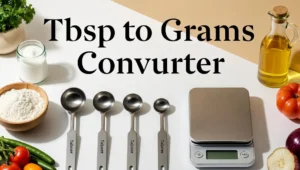
How Many Grams in a Tablespoon?
When people ask how many grams in a tablespoon, the answer isn’t always straightforward. A tablespoon (tbsp) measures volume, while grams measure weight. Because different ingredients have different densities, one tablespoon can weigh very differently depending on what you’re measuring.
Why Tablespoons Do Not Always Equal the Same Grams
Density Differences Between Ingredients
Every ingredient has its own density. For example, honey is thicker and heavier than water, while flour is light and airy. That’s why:
- 1 tbsp honey weighs more than 1 tbsp water
- 1 tbsp flour weighs less than 1 tbsp sugar
Density is the key reason there is no single universal answer to how many grams in a tablespoon.
Volume vs Weight Explanation
- Volume (tablespoon): Measures how much space an ingredient takes up
- Weight (grams): Measures how heavy the ingredient is
Two ingredients can occupy the same space but have completely different weights. This is especially important in cooking and baking where precision matters.
General Conversion: Tablespoon to Gram Basics
Here are some commonly used approximations:
- 1 tbsp water = ~15 grams
- 1 tbsp sugar = ~12.5 grams
- 1 tbsp flour = ~8 grams
- 1 tbsp butter = ~14 grams
These values are widely accepted in cooking guides, but slight variations can occur depending on how ingredients are packed or measured.
Quick Reference Guide for Common Ingredients
| Ingredient | 1 Tablespoon (grams) |
|---|---|
| Flour | ~8 g |
| Sugar | ~12.5 g |
| Salt | ~18 g |
| Butter | ~14 g |
| Oil | ~13.5 g |
| Honey | ~21 g |
| Cocoa Powder | ~7 g |
| Baking Powder | ~12 g |
Cooking vs Baking Measurements
Cooking is generally more flexible, so rough estimates work fine. Baking, however, is more like science. Even a small difference in grams can affect:
- Texture
- Rise
- Moisture
That’s why professional bakers rely on grams instead of tablespoons for accuracy.
How a Tbsp to Grams Converter Works
A tbsp to grams converter helps you instantly convert volume into weight based on ingredient-specific density.
Understanding Volume to Weight Conversion
Volume Measurement Explained
Volume measures how much space something occupies. Tablespoons are part of the metric and US customary system used in recipes.
Weight Measurement Explained
Weight measures mass. Grams are more precise and consistent, making them ideal for baking and detailed recipes.
Ingredient Density and Why It Matters
Different ingredients behave differently:
- Flour density: Light and compressible, varies depending on how it’s scooped
- Sugar density: Heavier and more consistent than flour
- Liquid density: Usually close to water, but oils and syrups differ
This variation is why converters must account for specific ingredients rather than using a one-size-fits-all formula.
Formula Used in Tbsp to Gram Conversion
The basic idea is:
grams = tablespoons × density factor
Each ingredient has its own density factor. For example:
- Water: ~15 g per tbsp
- Flour: ~8 g per tbsp
Example Conversion Calculations
- Convert 3 tbsp sugar to grams
3 × 12.5 = 37.5 grams - Convert 5 tbsp flour to grams
5 × 8 = 40 grams
Why Online Converters Are Helpful
Online tools simplify the process by:
- Automatically applying correct density values
- Reducing calculation errors
- Saving time in the kitchen
They are especially useful for beginners and anyone following international recipes.
Tablespoon to Gram Conversion Chart for Common Ingredients
If you frequently wonder how many grams in a tablespoon, having a chart makes things much easier.
Flour Conversion Chart
- 1 tbsp flour = ~8 g
- 2 tbsp flour = ~16 g
- 5 tbsp flour = ~40 g
- 10 tbsp flour = ~80 g
Sugar Conversion Chart
- Granulated sugar: ~12.5 g per tbsp
- Brown sugar: ~13–14 g per tbsp (depends on packing)
- Powdered sugar: ~7–8 g per tbsp
Butter Conversion Chart
- 1 tbsp butter = ~14 g
- 2 tbsp butter = ~28 g
- 5 tbsp butter = ~70 g
- 10 tbsp butter = ~140 g
Liquid Ingredients Conversion
- Water: 15 g per tbsp
- Milk: ~15 g per tbsp
- Oil: ~13.5 g per tbsp
- Vinegar: ~15 g per tbsp
Baking Ingredients Conversion
- Baking soda: ~12 g per tbsp
- Baking powder: ~12 g per tbsp
- Yeast (dry): ~9 g per tbsp
- Cocoa powder: ~7 g per tbsp
Tbsp to Grams Converter for Baking Ingredients
If you’ve ever followed an international recipe, you’ve probably faced the classic confusion: tablespoons vs grams. A tbsp to grams converter becomes essential, especially in baking where precision can make or break your results. Unlike tablespoons (volume), grams measure weight—so conversions vary depending on the ingredient’s density.
This guide breaks everything down in a practical, easy-to-follow way so you can confidently convert tablespoons into grams for different baking ingredients.
Flour Types and Their Gram Conversion
Flour is one of the trickiest ingredients to convert because its weight depends on how it’s packed and its protein content.
All-purpose flour
1 tablespoon ≈ 7–8 grams
This is the most commonly used flour. Its moderate protein level gives it a balanced weight.
Bread flour
1 tablespoon ≈ 8 grams
Slightly heavier due to higher protein content, which makes it denser.
Cake flour
1 tablespoon ≈ 6–7 grams
Lighter and finer, so it weighs less per tablespoon.
Whole wheat flour
1 tablespoon ≈ 8–9 grams
Heavier because it includes the bran and germ.
Sugar Types and Conversion Differences
Sugars vary significantly in weight due to crystal size and moisture content.
Granulated sugar
1 tablespoon ≈ 12–13 grams
Standard white sugar with consistent crystal size.
Brown sugar
1 tablespoon ≈ 13–15 grams (packed)
Heavier because of molasses content and packing.
Icing sugar (powdered sugar)
1 tablespoon ≈ 7–8 grams
Very light and airy unless sifted or compressed.
Fat Ingredients Conversion
Fats are more consistent than dry ingredients but still vary slightly.
Butter
1 tablespoon ≈ 14 grams
A standard reference in most recipes.
Margarine
1 tablespoon ≈ 13–14 grams
Similar to butter but may vary by brand.
Vegetable oil
1 tablespoon ≈ 13–14 grams
Liquid and consistent across types.
Shortening
1 tablespoon ≈ 12–13 grams
Slightly lighter than butter due to texture.
Sweeteners Conversion
Honey
1 tablespoon ≈ 21 grams
Maple syrup
1 tablespoon ≈ 20 grams
Corn syrup
1 tablespoon ≈ 20–21 grams
These are heavier due to their thick, dense consistency.
How Many Grams in a Tablespoon for Liquid Ingredients
Liquids are easier to convert because they have more consistent density.
Water
1 tablespoon = 15 grams
This is the baseline for most liquid conversions.
Milk
1 tablespoon ≈ 15–16 grams
Slightly heavier due to fat and protein.
Vegetable Oil
1 tablespoon ≈ 13–14 grams
Honey
1 tablespoon ≈ 21 grams
Syrup
1 tablespoon ≈ 20 grams
Why Liquid Conversions Are More Consistent
Liquids naturally settle into measuring spoons without air gaps. Unlike dry ingredients, there’s no variation from packing or fluffing, which makes a tbsp to grams converter more reliable for liquids.
Tablespoon to Gram Conversion for Dry Ingredients
Dry ingredients are where most conversion mistakes happen.
Flour
1 tablespoon ≈ 7–8 grams
Sugar
1 tablespoon ≈ 12–13 grams
Cocoa Powder
1 tablespoon ≈ 5–6 grams
Very light and prone to clumping.
Baking Powder
1 tablespoon ≈ 12 grams
Salt
1 tablespoon ≈ 17–18 grams
Fine salt is denser than coarse salt.
Why Dry Ingredients Can Vary in Weight
Several factors affect dry ingredient weight:
- Packing method (loose vs compact)
- Humidity levels
- Ingredient texture (fine vs coarse)
- Sifting or not sifting
That’s why even the best tbsp to grams converter should be used as a guideline rather than an absolute rule.
Kitchen Tips for Accurate Tablespoon to Gram Conversion
Using the right technique can significantly improve your baking results.
Using a Digital Kitchen Scale
Benefits of measuring by weight
- Higher accuracy and consistency
- Fewer dishes to clean
- Better results for baking recipes
- Eliminates guesswork from volume measurements
A digital scale is the most reliable companion to any tbsp to grams converter.
Proper Way to Measure Tablespoons
Leveling technique
Always level off the top with a flat edge (like a knife) to avoid excess.
Spooning vs scooping flour
- Spooning: Lightly fill the spoon → more accurate
- Scooping: Directly digging into flour → packs it, adding extra weight
Avoiding Common Measurement Mistakes
- Using heaped instead of level tablespoons
- Not accounting for ingredient type
- Ignoring humidity effects
- Substituting ingredients without adjusting weight
Professional Chef Measurement Tips
- Always measure dry and liquid ingredients separately
- Use standardized measuring spoons
- Weigh ingredients when baking, especially for cakes and bread
- Calibrate your scale regularly for precision
Common Cooking Mistakes When Converting Tablespoons to Grams
When people search for how many grams in a tablespoon, they often expect a simple, universal answer. The reality is more nuanced. Converting tablespoons (tbsp) to grams depends heavily on the ingredient, measuring method, and even regional standards. Overlooking these details can lead to inconsistent results, especially in baking or precise cooking.
Let’s break down the most common mistakes so you can avoid them in your kitchen.
Assuming Every Ingredient Has the Same Weight
One of the biggest misconceptions is thinking that 1 tablespoon always equals the same number of grams. In reality, different ingredients have different densities.
For example:
- 1 tbsp of sugar ≈ 12–13 grams
- 1 tbsp of butter ≈ 14 grams
- 1 tbsp of flour ≈ 7–9 grams
This means the answer to how many grams in a tablespoon changes depending on what you’re measuring. Treating all ingredients equally can throw off recipes, especially delicate ones like cakes or pastries.
To get consistent results, always look up the specific ingredient rather than relying on a general conversion.
Using Packed vs Loose Ingredients
Another subtle but important factor is how the ingredient is measured—packed or loose.
For instance:
- Packed brown sugar is much heavier than loosely scooped brown sugar
- Flour that is scooped directly from the bag tends to be denser than flour that is spooned into the tablespoon
This difference can significantly affect the gram weight. If a recipe doesn’t specify, assume a level (not packed) tablespoon unless stated otherwise.
Ignoring Regional Tablespoon Differences
Not all tablespoons are created equal. This is often overlooked but can make a noticeable difference in international recipes.
Here are common variations:
- US tablespoon = 14.79 ml
- UK tablespoon = 15 ml
- Australian tablespoon = 20 ml
That Australian tablespoon is significantly larger, which means the gram equivalent will also be higher. If you’re following a recipe from another country, double-check the tablespoon standard being used.
Over-measuring or Under-measuring Ingredients
Even with the correct conversion, technique matters. Small errors in measuring can lead to big differences in the final dish.
Common issues include:
- Heaping instead of leveling the tablespoon
- Not using a proper measuring spoon
- Estimating by eye instead of measuring precisely
For better accuracy, use standardized measuring spoons and level off ingredients with a flat edge. When precision is critical (like baking), consider using a kitchen scale instead of relying solely on tablespoons.
Online Tools and Apps for Tbsp to Grams Conversion
With so many variables involved, it’s no surprise that many cooks turn to digital tools for help. Modern converters make it easier to answer questions like how many grams in a tablespoon without guesswork.
Digital Kitchen Calculators
Digital kitchen scales with built-in unit conversion features are becoming increasingly popular. Some advanced models allow you to switch between tablespoons, grams, ounces, and milliliters instantly.
These tools are especially helpful when:
- Following complex recipes
- Scaling ingredients up or down
- Ensuring consistency in baking
They remove the need for manual calculations and reduce human error.
Cooking Conversion Websites
There are many reliable cooking conversion websites that provide detailed ingredient-specific conversions.
Features often include:
- Ingredient databases (flour, sugar, oil, etc.)
- Instant tbsp-to-grams conversion
- Adjustable serving sizes
These platforms are perfect for quick checks while cooking or meal prepping.
Mobile Apps for Cooking Measurements
Mobile apps take convenience a step further by putting conversion tools right in your pocket.
Popular features include:
- Voice input for hands-free use
- Saved ingredient preferences
- Offline access for kitchen use without internet
Whether you’re a beginner or an experienced cook, apps simplify the process of converting tablespoons to grams on the go.
Benefits of Using a Tbsp to Grams Converter Online
Using an online converter comes with several advantages:
- Accuracy: Reduces guesswork and ensures correct measurements
- Speed: Instant results without manual calculations
- Versatility: Works with a wide range of ingredients
- Consistency: Helps replicate recipes with reliable outcomes
If you frequently wonder how many grams in a tablespoon, these tools can save time and improve your cooking results.
Tbsp to Grams Converter for International Recipes
Cooking recipes from around the world is exciting, but it also introduces measurement challenges. Different countries use different systems, making conversions essential.
Converting American Recipes
American recipes commonly use tablespoons, cups, and teaspoons. When converting to grams:
- Pay attention to ingredient density
- Use US tablespoon standards (14.79 ml)
- Be extra precise for baking recipes
Many US recipes assume level measurements, so avoid heaping unless specified.
Converting European Recipes
European recipes typically use the metric system, meaning grams and milliliters are standard.
When converting from tablespoons:
- You’ll often need to reverse the process (tbsp → grams)
- Accuracy is critical, especially in baking
- A kitchen scale is highly recommended
European recipes are generally more precise, which can improve consistency.
Converting Asian Recipes
Asian recipes vary widely depending on the country. Some use metric units, while others rely on spoons and traditional measurements.
Tips for conversion:
- Check whether the recipe uses metric or spoon-based units
- Be mindful of ingredient types (e.g., sauces vs powders)
- Adjust based on regional tablespoon sizes if needed
Flexibility is key when working with diverse cooking styles.
Why Global Recipes Require Accurate Measurement
Accurate measurement is crucial when adapting recipes across regions. Small differences in tablespoon size or ingredient weight can lead to:
- Texture issues (too dry or too wet)
- Flavor imbalance
- Inconsistent results
Understanding how many grams in a tablespoon for each ingredient helps bridge the gap between measurement systems and ensures your dishes turn out as intended.